
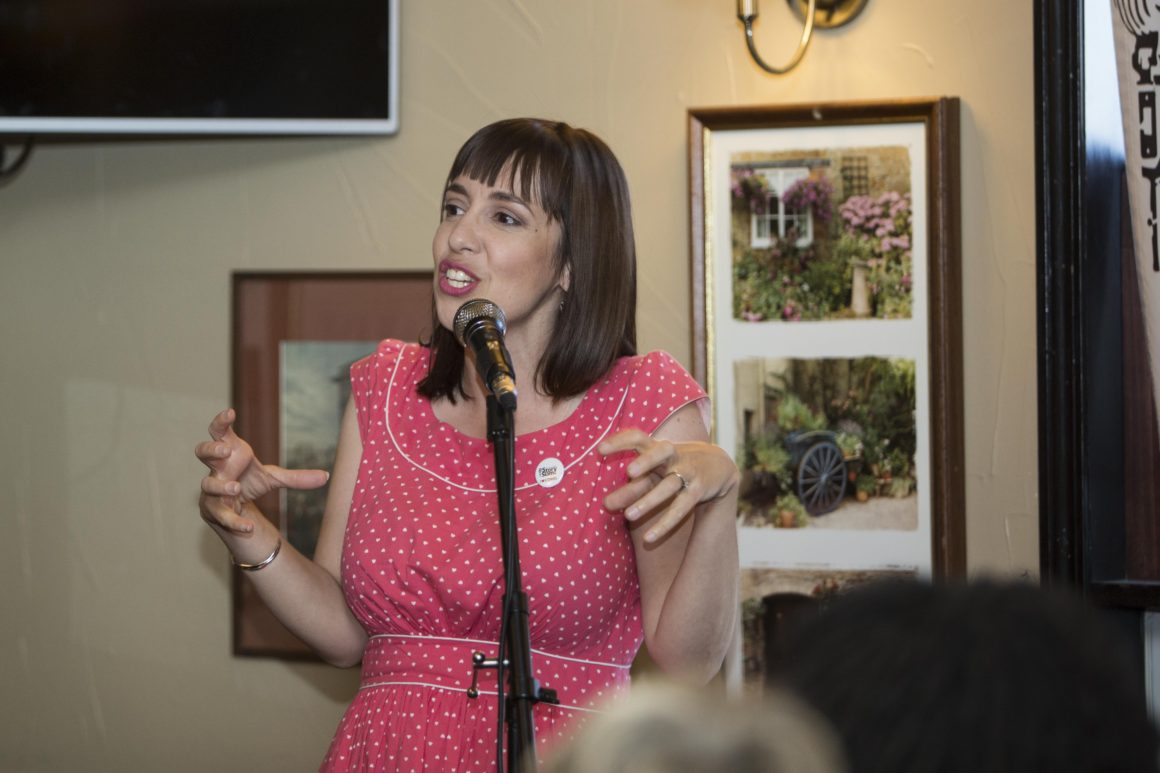
Storytellers get “busted” at the Calgary Story Slam
By Josh Harkema, September 20 2016 —
What better way to get your voice heard than to face a room full of strangers and expose your deepest, darkest secrets for all to hear? That opportunity comes to life at the Calgary Story Slam.
The Calgary Story Slam is a storytelling competition held between 7:00 p.m. and 10:00 p.m. on the third Thursday of every second month at Craft Beer Market.
The event features local storytellers with all levels of experience who tell real and intimate stories of their lives that surround a theme of the evening in a five-minute period.
“Storytellers are given five minutes to tell the audience a story about themselves. There are three rules: the story must be true, the story must be about the speaker and no notes are allowed on stage. It’s not a creative writing competition,” says event organizer Jillian Yawney.
The next Story Slam — taking place on Sept. 29 — features the theme “Busted!” Storytellers are asked to tell a tale of a time that they were caught doing something they probably shouldn’t have been doing.
“The theme is left deliberately vague so people will bring their own creativity, It’s interesting to see how each person develops the theme,” Yawney says. “Each night, three random people are picked out of the audience to judge each storyteller on three things: was the story on topic, its awesomeness and audience reaction. There is a fourth judge not selected from the audience, to make sure the stories stay within the five-minute time limit.”
In addition to the pride of knowing you’re a great storyteller, winners of each bi-monthly event eventually come together in a final Story Slam-Off. The most recent Slam-Off took place on June 5.
Past Story Slam winner and University of Calgary law student Jeff Reimer says that anybody could tell stories at the event and have a good time.
“Your story doesn’t have to be funny. Many serious or sad stories are successful. The most important thing is to be compelling, real, and make it true,” he says. “Truth contributes to the realness. It just has to be real.”
Reimer says that one of the best things about the Story Slam is the welcoming environment provided by the audience of open-minded individuals.
“Story Slam audiences are much more forgiving than comedy audiences. You’re definitely not going to get heckled because the expectations [at the Story Slam] are different than a comedy club,” he says. “If you want to work on your public speaking, or being a compelling orator, Story Slam is a welcoming audience for you to practice.”
The next Story Slam will take place Sept. 29 at Craft Beer Market from 7:00 p.m. to 10:00 p.m. The event is open to the public.