
Anxiety, but make it a personality trait
By Khadija Tembo, April 25 2026—
Why streaming dramas keep aestheticizing mental illness
Welcome to the golden age of aesthetic anxiety.
If you’re writing a buzzy streaming drama and your character needs depth, complexity or something to do between long, meaningful stares into the middle distance, the formula is simple: give them anxiety. Add trembling close-ups. Cue the heavy breathing. Dim the lights. Make sure someone hyperventilates in a bathroom at least once per season.
Congratulations, your character is now “layered.” The only issue? Anxiety isn’t a production upgrade.
According to the DSM-5-TR, a panic attack associated with anxiety involves a sudden surge of intense fear that peaks within minutes and includes symptoms like heart palpitations, trembling, shortness of breath, dizziness or fear of losing control. It’s physiological, it’s involuntary and it’s not something you sprinkle in to signal emotional depth.
For example, when Netflix’s Sex Education shows Jackson Marchetti collapsing mid-swim, the scene avoids the glossy aesthetic many shows lean on when depicting anxiety. During a swim meet, Jackson suddenly loses control of his breathing. His stroke slows, he clings to the edge of the pool and he struggles to orient himself as the noise of the competition fades into the background. The moment is abrupt and disorienting rather than cinematic, which is exactly why it feels real.
He can’t breathe properly. His hands shake as he pulls himself out of the water. For a moment, he looks detached from what’s happening around him, overwhelmed by a physical reaction he cannot stop. That portrayal lines up closely with how panic attacks are described in the DSM-5-TR.
What makes Jackson’s storyline feel more grounded is that the show doesn’t treat panic attacks as a one-off dramatic flourish. The anxiety continues to interfere with his life afterward. He begins avoiding competitive swimming, struggles with the pressure placed on him by his mothers and finds it difficult to perform at the same level he once did. Therapy scenes are uncomfortable and slow rather than framed as a cinematic breakthrough.
In other words, anxiety complicates his life. It doesn’t make him more mysterious. It just makes things harder.
Now, let’s talk about when things get… cinematic.
In Netflix’s 13 Reasons Why, Clay Jensen’s distress initially resembles anxiety. Early in the series, he ruminates constantly about Hannah’s suicide, struggles with sleep and carries an overwhelming sense of responsibility for things he believes he should have prevented. His distress often appears through racing thoughts, hypervigilance and emotional exhaustion — symptoms audiences easily recognize as anxiety.
But as the series progresses, Clay’s psychological state begins to shift in ways that move beyond anxiety symptoms.
In several scenes across later seasons, Clay begins seeing Bryce Walker and Monty de la Cruz around the school after their deaths. He walks through hallways, having conversations with them and reacting as though they are physically present. The camera initially frames these moments like real interactions before revealing that Clay is speaking to empty space while other students watch in confusion.
The scenes are tense and dramatically effective. They also introduce something anxiety disorders do not include: hallucinations.
The DSM-5-TR does not list hallucinations as a defining feature of anxiety disorders because hallucinations fall under psychotic symptoms and are associated with entirely different diagnostic categories. Anxiety disorders involve excessive fear and physiological arousal, whereas psychotic disorders involve disruptions in perception or reality testing.
Clay’s storyline gradually blends several experiences together. His panic, trauma and guilt remain central to the narrative, but they begin to coexist with hallucinations, paranoia and dissociative episodes. Because the show frames his unravelling as one continuous arc of anxiety and trauma, these symptoms blur together.
For viewers unfamiliar with diagnostic distinctions, the shift is easy to miss. Clay’s breakdown simply looks like anxiety getting worse, and the bigger the breakdown, the deeper the character, right?
But when everything is folded under the same emotional label, the word “anxiety,” starts doing way too much heavy lifting, obscuring the effects of the disorder on real individuals beyond the show.
Then there’s HBO’s Euphoria.
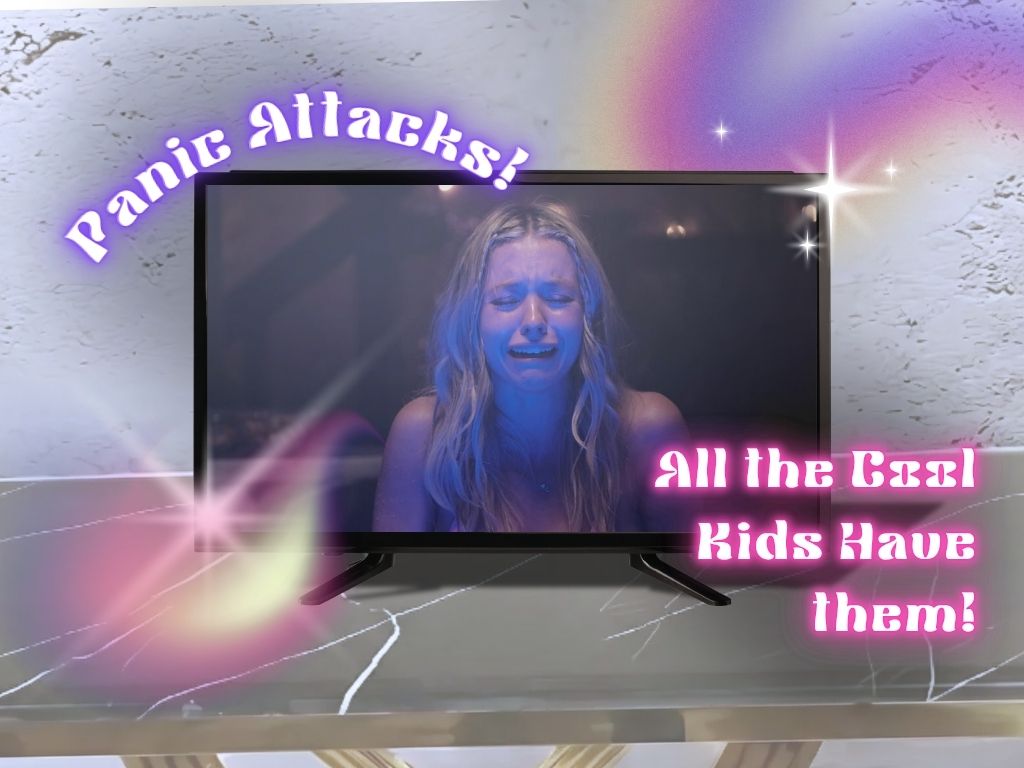
Cassie Howard spends much of the second season crying, hyperventilating and spiraling through intense relationship drama. She fixates obsessively on Nate Jacobs, panics about being abandoned and experiences dramatic emotional swings that feel amplified by the show’s neon-lit visual style.
One scene that captures this escalation occurs when Cassie locks herself in the school bathroom after a confrontation with Maddy. She paces the floor, crying uncontrollably, staring at her reflection and trying to regulate her breathing. Visually, it resembles the kind of panic response television has trained audiences to interpret as anxiety.
But the broader pattern of her behaviour does not align neatly with the diagnostic criteria for generalized anxiety disorder (GAD).
GAD involves excessive, hard-to-control worry that occurs more days than not for at least six months and includes symptoms like restlessness, fatigue, irritability and sleep disturbance. It’s chronic. It’s pervasive. It doesn’t just spike because someone didn’t text back.
And not every intense emotional reaction meets that threshold. Sometimes it’s insecurity. Sometimes it’s trauma. Sometimes it’s just being 18 and making catastrophic relationship choices (we’ve all been there).
But when every meltdown is labelled as anxiety, the diagnosis starts to lose its meaning.
Streaming dramas have figured out that mental illness signals depth. A character unravelling feels complex. It makes the show seem serious, worth analyzing, worth tweeting about, worth arguing over in a group chat at 1 a.m.
But aesthetic intensity isn’t psychological accuracy.
Anxiety isn’t just heavy breathing in dramatic lighting. It’s a persistent worry that lingers long after the episode ends. It’s avoidance that shrinks someone’s world. It’s impairment that affects daily functioning. It’s a diagnosis with criteria, duration and consequences — even if those don’t look as visually compelling as a slow zoom and a swelling soundtrack.
Television doesn’t need to become a diagnostic manual — drama will always exaggerate. But if anxiety is going to keep being used as character development, it deserves more than aesthetic treatment.
Because there’s a difference between depicting a disorder and decorating a character with one, and when that distinction disappears, so does the clarity viewers deserve.
This article is a part of our Opinions section and does not necessarily reflect the views of the Gauntlet editorial board.