
On the backstretch: a ladies in racing weekend at Century Downs
By Leigh Patrick, July 20 2026—
Hay, heat and smoked barbecue waft through the air on the evening of Friday, July 10.
Water sprays off the track as a chorus of male voices crackles over the blare of the DJ’s country music. A trumpet sounds. Kids in too-big cowboy hats scramble to the fence as six Standardbred horses trot behind the starting car.
Suddenly, the truck folds in its metal wings and pulls sharply to the outside of the track. Freed, the Standardbreds fall into single file, pacing in an uncanny, rhythmic unison, driven by men in silks with whips in hand.
As the winner is announced, a stark reality settles over the grandstand. A close look at the track revealed the most visible roles — drivers and announcers — were almost exclusively male. In a sports landscape where women-led athletics are exploding in mainstream media popularity, the absence of women in the sulkies is striking.
At an event entitled Ladies in Racing, the question to be answered quickly became: Where are all the women?
Century Downs Race Track was eager to answer this query. Every summer, they hold a weekend to highlight the many women who make racing possible. Karen Franco, marketing and guest services director, explains that no female drivers are competing on their track this season, meaning “a lot of the stories don’t get seen.”
Many of the women are not front and center on the track, but that doesn’t mean that they’re not integral to the success of harness racing. In fact, women make up half of the Alberta Standardbred Horse Association (ASHA) executive board, fighting to protect the horses, the owners and the racers and unite the relationships between all parties.
Nancy Retzlaff, Executive Director of ASHA, even acknowledges the gender gaps in the sport.
“The industry needs more women at every level, and there has never been a better time to get involved.” Retzlaff noted in her statement about the Century Downs special program for the weekend event.
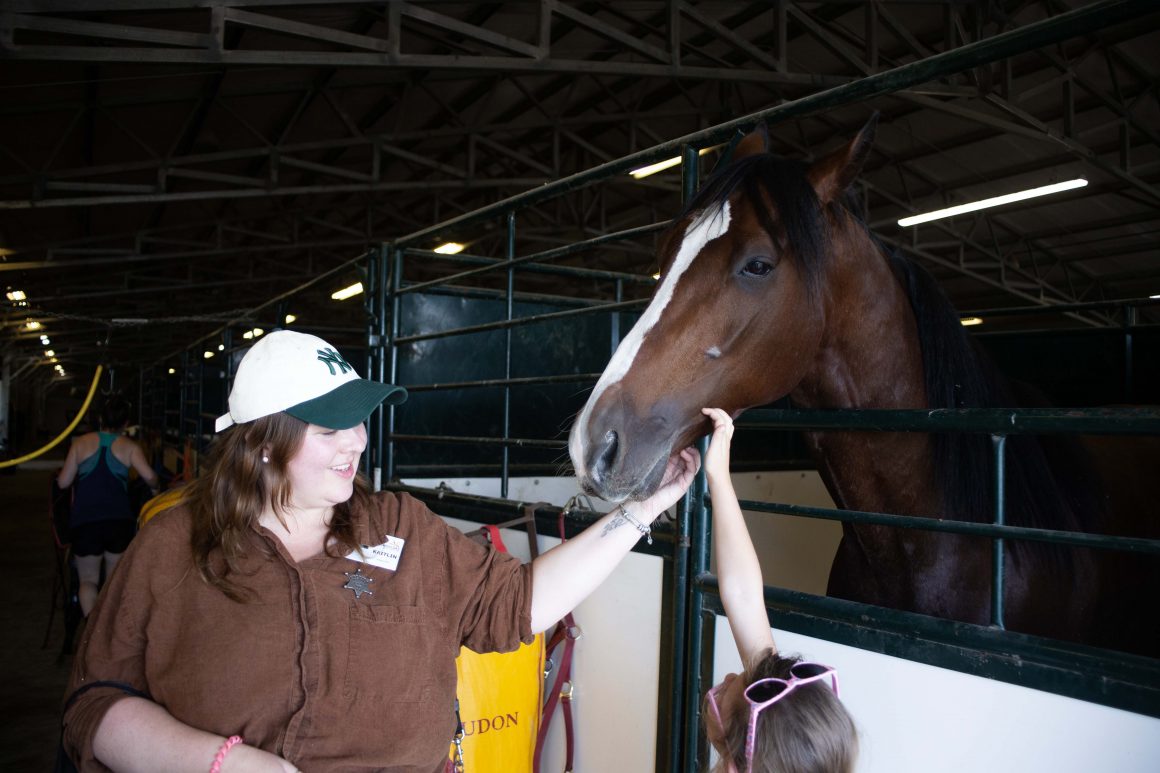
To bridge these gaps, the Ladies in Racing event serves as a showcase and an invitation to a career in the industry. Answering that call means looking past the pristine track and heading into the barns. Among the manure and hay, stand the women who keep the horses in peak condition and keep the industry moving forward.
“There are so many different career paths within the industry, and every role plays an important part in its success. Be willing to ask questions, learn from those around you, and take advantage of every opportunity to gain experience,” said Jocelyn Giesbrecht, the marketing and special events coordinator of ASHA. Giesbrecht also operates on the ground as a current horse owner and trainer.
For the public, that behind-the-scenes dedication took centre stage the very next day, transforming the track’s grit into a celebration. Saturday, July 11—arrived in a wave of pink and glitter — with horses decked in temporary tattoos of hearts and stars, trailing flowers and streamers as they strode around the track.
The patio next to the track hosted a wall of flowers and women of various ages wandering around, entering draws and lining up at the betting counter.
While men have historically dominated the driver’s seat, women have long been the unseen engine of the backstretch.
This weekend put them in the public eye, featuring a women-led exhibition race and profiles in the day’s program.
Behind the scenes in the paddock, the real power of the weekend was on display. Ranked as the No. 1 horse trainer in Alberta and among the top 10 nationally by ASHA standings, Rebecca Kanak stands as living proof of women’s vital work driving the sport.
Kanak currently owns 27 horses; her barn is filled with those preparing to race, her whiteboard is meticulously marked with the training schedule for each horse, and she stands next to a brown horse that nuzzles gently into her shoulder as she details the logistics of her training regimens.
Much like training for a marathon, each horse is given a training schedule to help them reach their top speed.
These include sprint days and long runs, as well as physiotherapy and acupuncture sessions to keep the equine athletes in peak condition.
Kanak runs her hands through her horse’s thick mane as she details her journey to becoming the top trainer.
“I was working in a vet clinic part-time through high school and university to help put me through school. I got to know some of the trainers at the racetrack in Saskatoon, and they needed help with paddock work. Then I just fell in love with it,” she explains, “To be a trainer you have first to be a groom, so that’s where I started and now I am here.”
The efforts and contributions of women like Kanak are not front and center on the track, but without them, racing would be altered considerably.
Through balancing the intense logistics of managing a stable with the intuitive horsemanship required to condition champion Standardbreds, these trainers are the foundation of racing.
Back on the spectators’ patio, young girls in twirling dresses watch the horses stride past the rail. They are watching the final product of a massive, hidden network of women — a reminder that while the drivers this season are men behind the sulkies, the power behind the pace belongs to the women on the backstretch.
Events like Ladies in Racing at Century Downs showcase the invisible labour done behind the track.
The programs and exhibition races feature the women who shape the industry through their work in the stables, on executive boards, and in conditioning top-tier athletes.
While gender gaps remain, these women aren’t afraid to keep doing the work without the glamour of front-page rewards.