
Werklund activates COVID-era contingency as teachers’ strike disrupts practicums for education students
By Holly Anghel, October 6 2025—
On Monday, Oct. 6, 2025, thousands of Alberta teachers will hit the picket line in the province’s first general teachers’ strike in decades.
Teachers overwhelmingly rejected the province’s offer of a 12 per cent raise over four years and a promise to hire 3,000 additional teachers, arguing that the proposal fails to address chronic underfunding, overcrowded classrooms, and growing student needs.
The Alberta Teachers’ Association (ATA) reported that 89.5 per cent of educators voted to reject the government’s contract offer, leaving approximately 700,000 students across 2,500 schools out of class as negotiations with the government remain unresolved.
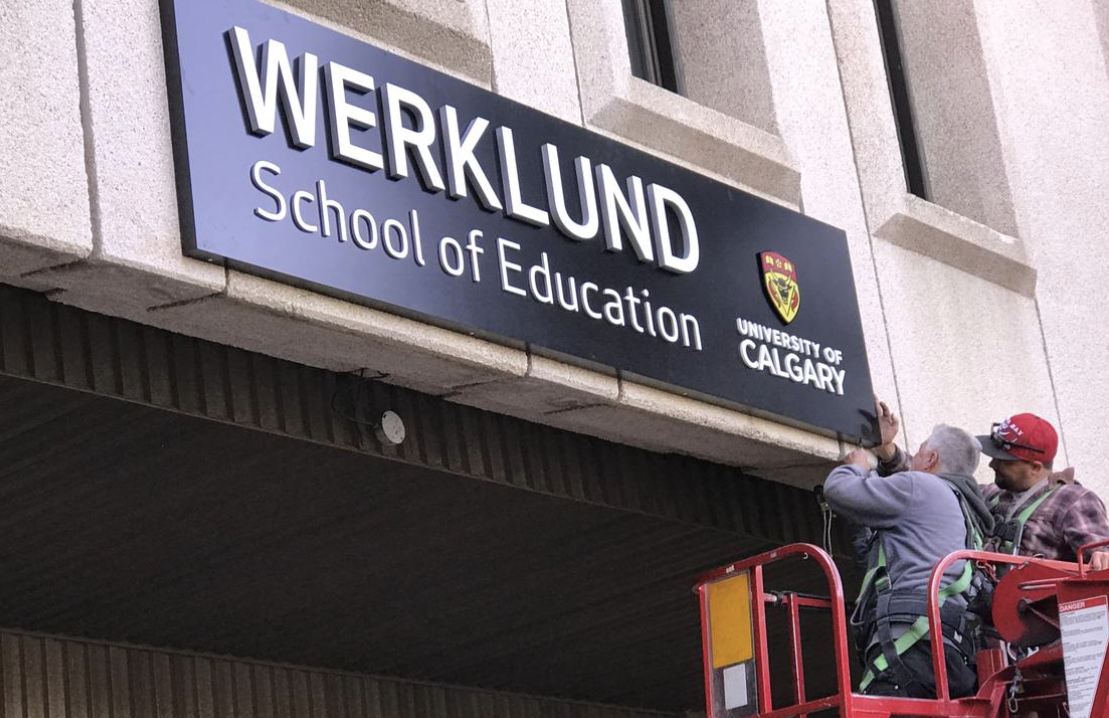
The strike has prompted the Werklund School of Education to adapt its fall field experience practicums, affecting many students who were scheduled to begin their practicums this week.
Marcelo Cano Cazares, a first-year student in the two-year Bachelor of Education after-degree program, was eager to begin his practicum. He graduated with a degree in history last spring, but says he’s known since high school that he wanted to become a teacher.
“I had the benefit of having a great teacher in high school social studies,” said Cazares. “Since then, I’ve wanted to play a role in educating people.”
The anticipation quickly turned into uncertainty when news broke that the province-wide teachers’ strike would begin on Oct. 6 — the very day he was supposed to enter the classroom.
“Hearing about it was a bit hard,” said Cazares. “It kind of felt like the rug was being swept out from under my feet.”
Dr. Erin Spring, associate dean of Undergraduate Programs in Education, emphasized that while the strike may change what practicums look like, students’ program timelines will remain intact.
“Of course, it is impacting students in the sense that they had expected to be out in the classrooms,” said Spring. “But I want to reassure our students that we have a plan in place, and students will progress through their program as planned and will graduate on time.”
The program is activating the Alternative Online Learning Plan, a contingency developed during the COVID-19 pandemic. Instead of in-person field experience, students will complete guided online activities with their instructors and peers until schools reopen.
“It’s a tried and tested model,” Spring explained. “COVID-era students did this when they were not able to go into schools, and those students have now graduated and are practicing teachers.”
Although the university is confident in the effectiveness of its online learning plan, some students worry that the experience won’t measure up to time spent in the classroom.
“I don’t really want to go back to asynchronous video-based learning,” said Cazares.
Having completed a portion of his history degree online during the COVID-19 pandemic, Cazares is no stranger to the limitations of remote platforms. But despite the uncertainty surrounding the practicum, support for teachers remains strong amongst their peers.
“Our practicums are not going to be the same experience that other folks might have had,” said Cazares. “But the teachers going on strike have the support of all the pre-service teachers.”
Spring said the faculty is in ongoing communication with school boards and the ATA, but the university’s focus remains squarely on supporting students.
“My message is that we are prepared for this and we are working to make sure that our students are prepared and can move through the next steps as seamlessly as possible,” said Spring.
For now, students like Cazares are trying to see the strike as a learning moment.
“We are seeing firsthand the intersection of politics, schools, and teacher responsibilities,” said Cazares. “Pay attention and be aware — this is part of your education too.”