
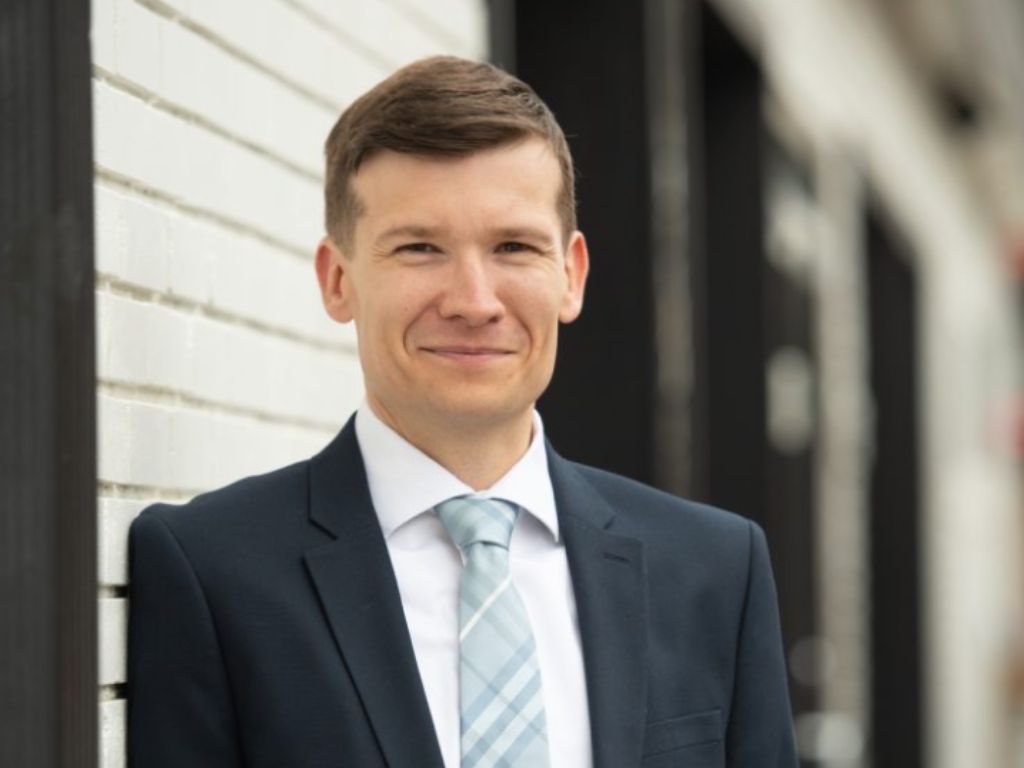
Jeromy Farkas reruns on a platform of collaboration and affordability
By Anna Maxwell, October 16 2025—
Jeromy Farkas, a former Ward 11 city councillor and University of Calgary alumnus, is re-running for mayor.
In an interview with the Gauntlet, Farkas criticized the newly introduced municipal party politics as harmful to local governance. He said party labels create “grievance and dysfunction” and distract from practical solutions.
Running as an independent, Farkas said he will avoid partisan battles.
“We can’t afford to have eight people on the inside and seven people on the outside,” he said.
Instead, Farkas said the mayor should act as a coach, “sharing the podium” and credit with councillors to get things done.
In regard to housing affordability, Farkas noted that roughly 40 per cent of Calgarians are renters, and said city policies must help renters as well as homeowners.
“My vision for Calgary is one where every single Calgarian is respected and deserves to have access to a safe and affordable quality of life,” he said.
Farkas said he proposes working with nonprofits and private partners to develop more affordable housing on city-owned land — especially near LRT stations — which would expand the property tax base and reduce costs for residents.
On transit access and funding, Farkas supports building the Green Line LRT but argues the city needs a modern transportation network beyond any single project.
“If you don’t live near the Green Line, you still need to know that you have access to a quality service,” he said.
He is promoting more bike lanes, better bus service, coordinated traffic signals and other measures as part of a broader mobility plan. He is also a longtime proponent of Calgary’s low-income transit pass.
“It’s one of the biggest measures of poverty reduction that the city has implemented,” he said.
Concerning public safety, Farkas said he will conduct an audit of every CTrain station to add Crime Prevention Through Environmental Design (CPTED) improvements and will put “more eyes on transit” through community policing.
“Parents need to trust that their kids can walk to school. Commuters need to feel safe on transit. Businesses need secure streets,” he said.
For Farkas, an increase in the police budget must come with accountability. He also plans to expand mental-health and housing-first programs.
“[The city must be] tough on crime and even tougher on its causes,” he said.
Farkas also highlighted his record on youth and student initiatives. He noted that, as one of Calgary’s youngest-ever councillors, he pressed to restore the city’s summer student hiring program.
“Our next generation needs jobs, to get engaged, to gain experience,” he said, adding that City Hall itself “has benefits from having those young people around the table.”
He described how he continues to mentor university students, and that involving the next generation at the table is crucial to solving citywide challenges around safety and affordability.
When asked about his goals for his potential first days in office, Farkas promised to work hard for Calgarians and prioritize listening.
“We all want safe streets for our kids, jobs we can count on, housing we can afford and leadership we can trust,” he said.
He said that he has kept his promises during his time on the council — at one point even turning down the councillor pension — to build trust with voters.
Specifically addressing university students, Farkas said he understands their concerns from personal experience.
“I know what it’s like to live with housing precariousness, to worry about paying for groceries or tuition or rent,” he said, recalling how he paid off student loans while serving on council.
Calling himself a pragmatist rather than an ideologue, he urged students to join him in shaping Calgary’s future.
“Work alongside me to help build up the city, so we can be safe, we can be affordable,” said Farkas. “My central message is that Calgary is a great, incredible place to live. I want to include you in the decisions so that it’s not just being done to you, but it’s being done along with you.”
Farkas’s campaign leans on pragmatism and collaboration, but beneath the polished rhetoric, his platform leaves key policy questions unanswered. His calls for affordable housing near transit and safer public spaces align with student priorities, yet they lack the detailed strategies needed to address Calgary’s deeper affordability crisis or long-term infrastructure gaps.
For many young Calgarians, his tone of inclusion and civic engagement feels genuine — even refreshing in a crowded field — but it risks sounding like a promise without a plan. Farkas positions himself as a unifier in a fractured political landscape, yet students looking for tangible pathways on housing, transit and employment may find that goodwill alone won’t build the city they’re hoping to inherit.
To vote in Calgary’s municipal election, you must be at least 18 years old, a Canadian citizen and a resident of Calgary on election day.
On Oct. 20, voters can cast their ballots for the city’s next mayor, as well as the councillor and school board trustee representing their ward.
For information on where to vote and how to get involved, visit www.electionscalgary.ca.