
A discipline that heals, educates and unites: Why I chose a music degree
By Sweta Babladi, November 7 2025—
When I was 17 years old, I decided that I wanted to be a musician.
Six years prior, I set myself on pursuing environmental science or law, and I had a step-by-step plan on how I was going to achieve that. I have always been deeply passionate about environmental conservation and angry at the general lack of care towards our future, so I knew exactly why I was going into that field. It was an easily digestible choice that I could justify to other people.
But despite my conviction, I was possessed by the tumultuous, extremely uncomfortable desire to pursue music. It was accompanied by an uncertainty about my future, imposter syndrome and the overwhelming awareness of just how bare my resume looked despite having been a musician my entire life. I was entirely unfamiliar with solo performance, my only ensemble experiences were my school bands and I had never even competed in the festivals or competitions which other musicians my age were winning prizes at.
As a teenager who was constantly concerned with keeping up with others’ expectations, and someone who was keenly aware of the unspoken hierarchy of “respectable careers” in our society, I could not help but wonder how many people I would be disappointing if I chose music.
And yet, despite all of these doubts in mind, I ultimately chose this path, and I can already hear you asking, “Why?”
Many of my earliest memories include music — singing with my grandmother, spending piano lessons telling my teacher all about the TV show I was obsessed with and feeling the adrenaline after my very first school band concert.
I have always been a musician.
It was such an integral part of my every-day life that I didn’t consciously recognize how much of a role it played in shaping who I am, but far beyond being a creative outlet that developed my confidence, discipline and well-roundedness, it was through music that I eventually understood how important creative pursuits are to being human.
As I reflected further on the importance of music in my personal life and on a societal level, I gained a profound appreciation for my music educators. They were not only masters of their craft, but through music and live performance, taught me about passion, commitment, risk-taking, responsibility towards community and leadership. So I took the shaky step forward and auditioned for post-secondary music because I knew I wanted to be just like them. I wanted to become an educator to share my love of music with the next generation, show them how being a performance artist opens up so much of the world and creates music-centred spaces where they feel unconditionally cared for.
I am currently a third-year music student studying flute performance at the University of Calgary.
Over the last few years, I have had incredible opportunities to develop numerous interdisciplinary skills, be coached by and learn from world-class professional musicians, and reflect on what I contribute to the world as an artist.
As musicians, we learn about the importance of interdisciplinary practice in the 21st century, such as using social media and marketing tools to reach new audiences that would not otherwise be exposed to genres such as classical music. I am learning how to develop compassionate pedagogy that inspires young people, including preventing playing-related injuries and using technology to accommodate different learning styles.
Playing my instrument is also a practice that goes beyond learning to play the correct notes — it’s a way to gain a deeper understanding of how I react to stress and frustration while developing a mind-body connection — crucial in any discipline — to do my best work.
Music requires both a logical consistency that makes excellence possible and a big-picture understanding of whatever story I want to convey. This has taught me to approach my goals with clarity and not take on a project until I understand why I’m devoting myself to it. I have found that I have to follow curiosities with nothing to do with music while actively creating meaningful relationships and pursuing unique experiences to find a distinct voice on stage. Live performance has taught me how to stay grounded in myself — it demands that I show my audience vulnerable aspects of who I am while detaching from the desire for external validation.
Over the years, what began as a quiet love for this art form has transformed into a strong belief in the necessity of the performing arts on a personal and societal level.
Music is inspiring in ways that most people have experienced, but do not know how to put into words. Think about your own experience with live music — have you ever gone into a concert hall or stadium saddled with stress, grief or anger and walked out feeling lighter and less alone?
Music is one of the art forms we turn to to take refuge from the exhaustion of everyday labour and monotony, or to preserve the memory of people we have lost. It is a way of preserving cultural history as we establish our own in the present day: from the role of jazz during the American Civil Rights Movement to protest songs throughout time, music acts as an anchor that gives people courage and a sense of unity.
The process of music-making with other people engages creativity while creating strong support systems and lifelong friendships. Such experiences are often transformational for young people — they were for me, anyways.
The gratitude I feel for this path that I’ve chosen is not always easy to articulate, especially when I’m faced with the reality that pursuing a creative career is a privilege that many people do not have in our society. There are days when I doubt if I’m setting myself up for a sustainable career, but when I take a step back to reflect on everything music has given me, I am reminded that it’s my responsibility to continue upholding the values that shaped my life, to give that back to the world as an educator and performer.
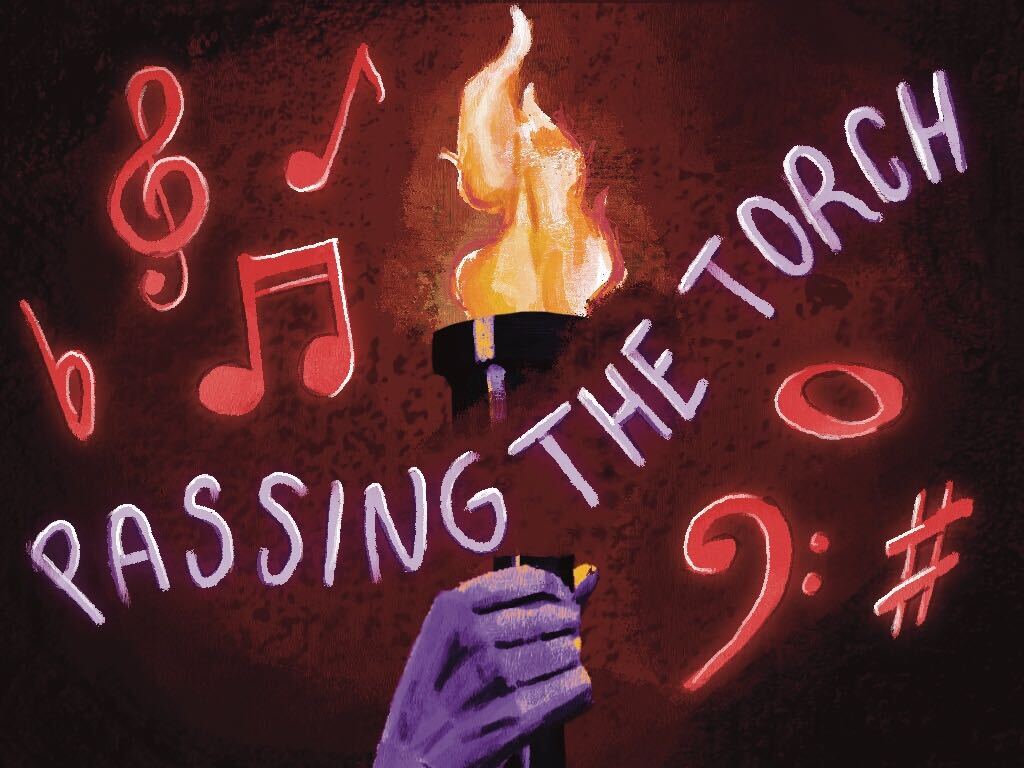
If only some of us will carry the torch, then I’m proud to be one of the few.
This article is a part of our Opinions section and does not necessarily reflect the views of the Gauntlet editorial board.