
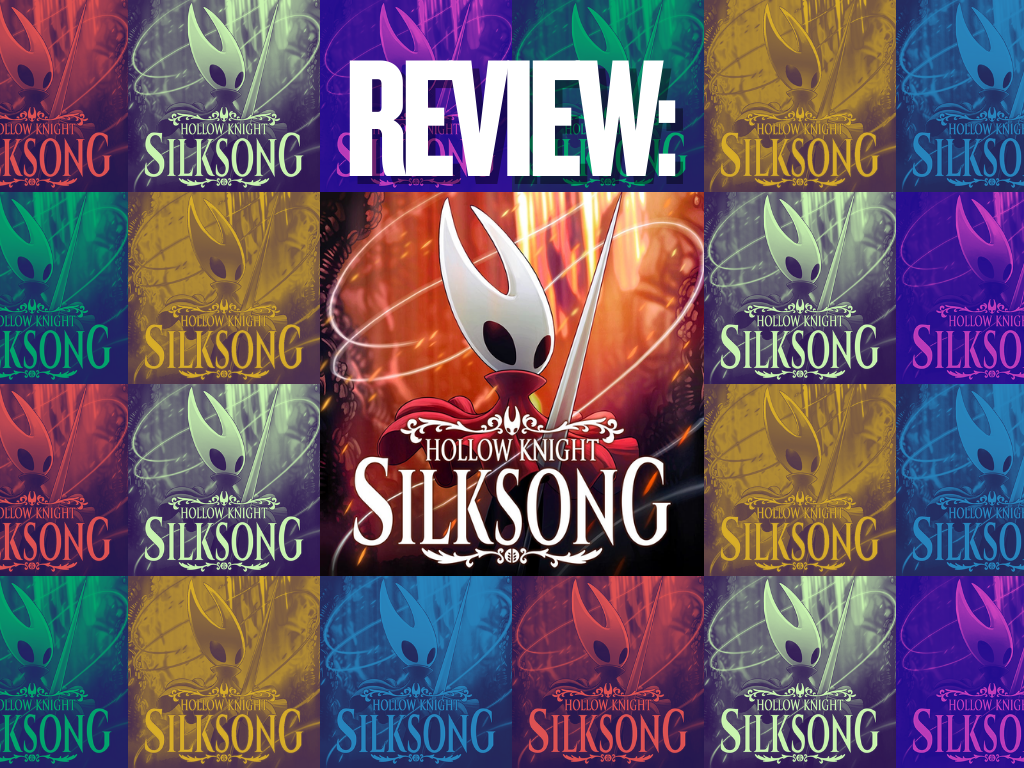
“Hollow Knight: Silksong” shows us that video games are absolutely an art form
By Cameron Sauder, November 18 2025—
Video games are potentially some of the richest, most nuanced forms of storytelling money can buy, and Hollow Knight: SIlksong shows us exactly why.
Stories have been around since the dawn of language, and as technology advances, humanity explores new forms of storytelling to push boundaries and experiment. You’ve got your stage plays, your puppet shows, your campfire tales and of course your books and movies.
But somewhere along the way, someone decided that some forms of storytelling were worth more than others — like films compared to your run-of-the-mill movies. Most of the time, video games get lumped in with that lower caste.
But they absolutely should not be — not all of them, at least.
Now, I’m talking to a very specific audience here. I suspect that a lot of you reading along will just be nodding your head, smirking and saying, “I’ve known this all along!” Thank you for reading, loyal gamer, but this article is truly aimed at the haters — at the people who consider video games a low brow form of entertainment.
Yes, I will admit, video games often don’t have much to them — Pac-Man isn’t exactly a masterclass in how to build a narrative, nor is your standard shoot em’ up like Fortnite or Call of Duty (which does have a story mode, but who are we kidding, nobody plays it). However, video games have come a long way, much like books and movies, to the point where some developers have used the medium to create one-of-a-kind, genuinely masterful narratives.
Games like Detroit: Become Human or The Wolf Among Us get their inspiration from movies, crafting cinematic stories that incorporate gamey elements — such as choosing the character’s actions and dialogue — to create nuance and multiplicity.
But I want to focus on a little indie gem that just came out, if you can even call it little with the thousands of invested fans playing: a unique soulslike game dripping with gothic charm and the sequel to one of if not the best Metroidvanias of all time.
Of course, I’m talking about Hollow Knight: Silksong, which not only matches the excellence of its predecessor but exceeds it.
For those of you in the house who have no idea what I’m talking about, I’ll give it to you briefly.
A Metroidvania is a subgenre of video game which gets its name from two mainstays in the gaming canon: Super Metroid and Castlevania. Games like this tend to be (but are not always) 2-D platformers which prioritize the exploration of a large, interconnected map and feature gradual upgrades which hone your traversal and combat skills. A soulslike, on the other hand, is a game inspired by the wildly influential FromSoftware soulslike games, such as Elden Ring and Dark Souls, which feature challenging yet rewarding combat systems; mechanics which punish the player, such as losing your currency on death; large, interconnected worlds; and a focus on environmental storytelling, a technique in which a game world’s rich lore is hidden within collectable items, visual cues and cryptic dialogue.
As you might expect, soulslikes and Metroidvanias go hand in hand, a combination that’s produced gems like Blasphemous, Salt and Sanctuary and, of course, Hollow Knight.
Now that we’ve gotten the technicalities out of the way, I want to talk about Silksong, because everything about this game stands out as excellent. The cursed land of Pharloom is bleaker than even the haunted kingdom of Hallownest from the first game, with its abandoned chapels and murky swamps juxtaposed with the cute and simple art style. Gameplay is harder, featuring faster combat and traversal mechanics on a whole new diagonal axis, but it feels more dynamic and rewarding.
If you’ve never heard of it or its predecessor, I urge you to give it a shot. It’s not easy by any means, but that’s part of the charm — you’ll have to learn from your mistakes, pick up on patterns and test your hand-eye coordination, but when all is said and done, you’ll get to experience the best of what video games have to offer as an art form.
When I spoke to Matthew Millum — president of the UCalgary Game Design Club — during Clubs Week, he emphasized just how much goes into making a video game, which really kickstarted this whole article. Video game designers have to consider not only the physical mechanics, but the visuals, the writing — including dialogue, compelling characters, multiple endings, etc. — as well as sound design and musical elements.
Hollow Knight nails all of this and more — especially the music. Composer Christopher Larkin created the instrumental soundtracks for both games in the series, and they are exquisite not only by video game standards. I frequently listen to these albums front to back, usually when I’m studying but not exclusively so. If the Hollow Knight games are dripping with charm, the soundtracks perfectly reflect and complement both their sombre, reflective moments and heart-pounding sequences, capturing complicated motifs and exhilarating emotions.
Personal standouts from the Silksong soundtrack include “Bone Bottom,” “Widow” and “Phantom.” The thing about game soundtracks is that they are specifically catered to the gamer’s emotions — whether you’re peacefully exploring a new area, anxiously diving into a dark and dangerous setting or battling a particularly difficult enemy, the music is built to enhance what’s going on.
As Millum explains, “[Video game designers] need to worry about pacing the player’s setting. In a movie, you know when the high is going to be — it’s going to be at this exact time, so you can build up to it. Whereas in a game, it’s kind of difficult because you need to make that all move with the player’s actions as opposed to just a specific time.”
And that strikes at a core concept of video game design: that everything is done by hand. Millum calls the programming the “biggest barrier” for newcomers, and it’s no surprise.
Everything — from the way your character moves and sounds to the way enemies respond to your movement and the various bits of dialogue a character might say depending on your previous actions — must be meticulously written into the code and ironed out to ensure a polished final product. Overseeing the development of a video game isn’t like directing a movie or writing a book: it requires constant testing and careful planning, which make creative triumphs like Hollow Knight: Silksong all the more impressive.
There are simply so many elements at work which combine to make this game as stunning as it is, and I’m only scratching the surface of praise I could give it.
Simply put, this game is a masterpiece, and it represents everything that video games can be as an art form. Of course, not every game is going to rise to the level of Silksong, but not every film will rise to the level of Interstellar either. Not every book is going to be as monumental as Frankenstein. Disregarding video games as a viable and valuable method of storytelling is only doing yourself a disservice — I dare you to wander through the vast and empty Choral Chambers, soak in Larkin’s haunting melody and not shudder in awe. It’s impossible, I’m telling you.
So if you love stories but have never turned to video games, do yourself a favour and pick up Silksong. For only $30 in a time where triple-A games can go for $110 (I’m looking at you, Nintendo), Silksong provides the perfect opportunity to explore what this medium has to offer. Or better yet, pick up Hollow Knight and experience where it all started — you’ll be thanking yourself once you eventually see the difficulty of Silksong, which is tough but fair.
And if you find yourself getting frustrated, failing repeatedly to the same challenge, don’t worry: you’re experiencing one of the quintessential, interactive components of video games, and when you finally conquer it, the satisfaction is going to leave you dying for more.