
TRIP and EMBER research help implement mental health training for frontline staff
By Hannah Caparino, December 11 2025—
The University of Calgary had recently saw the implementation and success of the pilot and research program, Trauma Resilience Informed Practice (TRIP) and Exploring Mental Health Barriers in Emergency Rooms (EMBER). EMBER is the overarching research program that has taken place in the last six years, and TRIP is the pilot program that put into practice the solutions that were gathered from the data collected through EMBER.
Dr. Jacqueline Smith sat down with the Gauntlet to explore how frontline workers began to break down the stigma surrounding mental illness and addiction in the emergency room (ER).
Funded by the Calgary Health Foundation to explore the effects of stigma in ERs. The study had first looked at how individuals with mental illness were treated and how medical staff had responded to the conditions and gave feedback that was presented by the research team.
“We first wanted to hear from the frontline staff.” said Smith, “So we did focus groups on one on one interviews with patients, families, ED doctors, ED nurses, psychiatrists, […] and protective services. We really wanted to know what it was like for them.”
After gathering information from the staff, the next step was to understand how individuals with mental illness had experienced the admission and waiting process in the ER. Smith had discussed that the environment for patients was less than ideal, with some interviews explaining that there were a lack of in-patient beds, concrete walls and shared facilities. The staff for these patients were solely ER nurses who were equipped with limited training and support for battling mental illness and addiction.
“So there was a perpetuation of this overall experience. Occupational stress was what the frontline staff described it as. So we’re up against a system that was really stigmatizing those with addiction and mental health, and not providing the resources for the frontline staff to take care of them,” said Smith.
To provide better care, Smith had introduced self-compassion training for frontline staff to better understand their own responses to traumatic situations in the ER environment. While working with Fraser Health Authority in BC, they introduced training and techniques to the frontline staff to understand their own bodily and mental responses to intense situations. The study reflected how they were able to implement these self-care practices to better care for, and empathize with patients and families.
“So we wanted the staff to understand how they were personally experiencing it,” said Smith. “We just put that all together in a package, gave them a voice, gave them the tools, really validated what they were experiencing, and our data showed that it made a difference.”
The data that was collected over the past six years also indicated the procedural changes that can take place, ultimately reframing the healthcare and ER experience for patients with mental illness. Procedural changes include the in-patient boarding process and understanding their patient’s history. For top-down changes to take place, Smith outlined that the research team’s approach hinged on their ability to recognize the process and policies that originally excluded training and care for those with mental illness. The team reviewed the policies, and opted to propose solutions to dissolve current and harmful policies.
“I think what’s happening is we’re creating this transparency of the system and showing the deficits and the impact of how these current policies and processes are really impacting. We hope that that ultimately will result in a change,” said Smith.
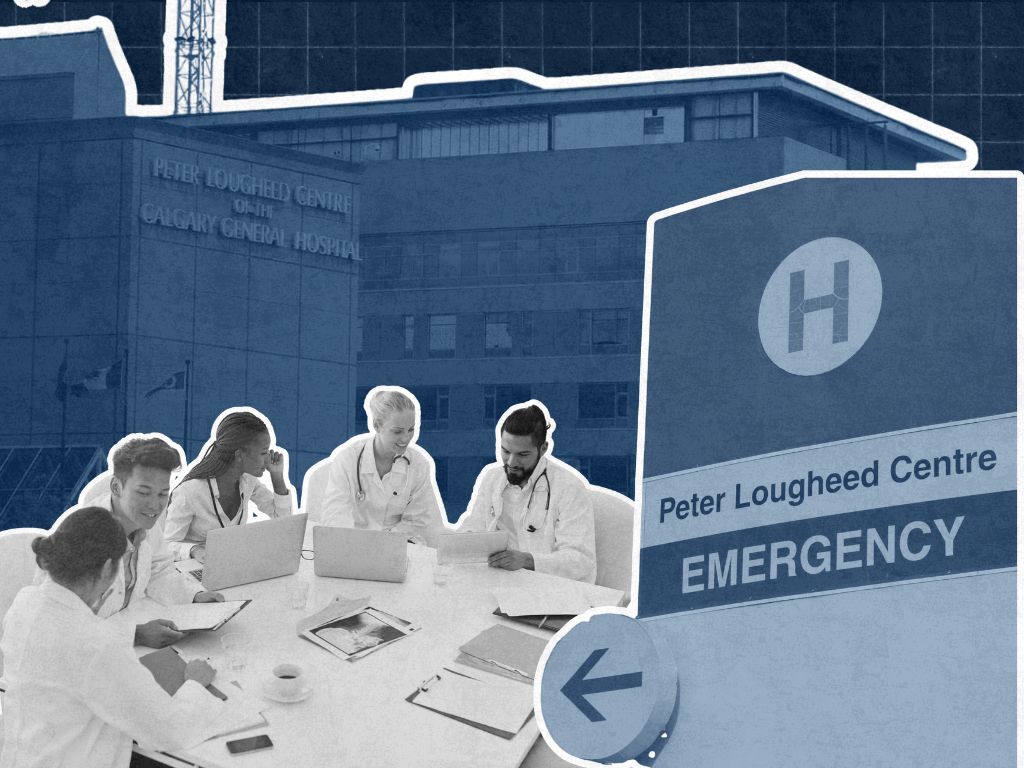
Smith had explained the importance of the funding that was provided to introduce renovations in hospitals such as Peter Lougheed. With these renovations, the space can be more safe and accessible for all patients and their families. While some hospitals have introduced the renovations, the funding hasn’t been introduced in hospitals like Foothills.
Philanthropist groups like the Calgary Health Foundation are also giving other locations the opportunity to introduce these interventions and training for over 500 volunteers at the Calgary Drop-In Center. Collaborating with these groups like the Calgary Health Foundation, the Viewpoint Foundation and Recovery Alberta gave the researchers an opportunity to make a difference on both the municipal and provincial level.
“I know as a nurse myself, we can’t give what we don’t have. So we’re providing the resilience to these frontline workers to be able to first take care of themselves so that they can give back to their clients,” said Smith.
The research had also been pitched to the Mental Health Commission of Canada where they will partner with them to continue implementing their new practices for frontline workers. Smith’s research proves that their research is beginning to expand beyond the local parameters originally pitched, entering the national level and destigmatizing mental illness in Canadian healthcare.
For those who’d like to participate can contact the EMBER team through EMBER.study@ucalgary.ca