
Defend your major: In the good name of political science
By Kiera Fitzpatrick-Moran, January 28 2026—
Political science students are, like many Arts majors, often met with doubt and concern in their choice of subject. However, political science is a broad-reaching and ever-relevant topic, and I will not waver in the confidence that I hold for it.
I spent this past summer splitting my time between bartending and serving at the restaurant of a local golf course. One warm July evening, while I was working at the bar, the restaurant was graced with a wedding party.
How exciting!
Every member of the party looked beautiful and unmistakably happy — happy in that particular way you can only really look after a celebration as grand as a wedding. Those who had, presumably, begun the day in expensive, perfectly tailored suits now sported rolled-up sleeves and had abandoned their ties. Intricate hairstyles had softened. Everybody seemed flushed with excitement. Then, just an hour before close, my admiratory bliss was interrupted by a seemingly harmless question.
“Oh, so you’re in university? What are you majoring in?”
Two gentlemen had approached me for refills, and we were making small talk while I zested an orange.
“Political Science!”
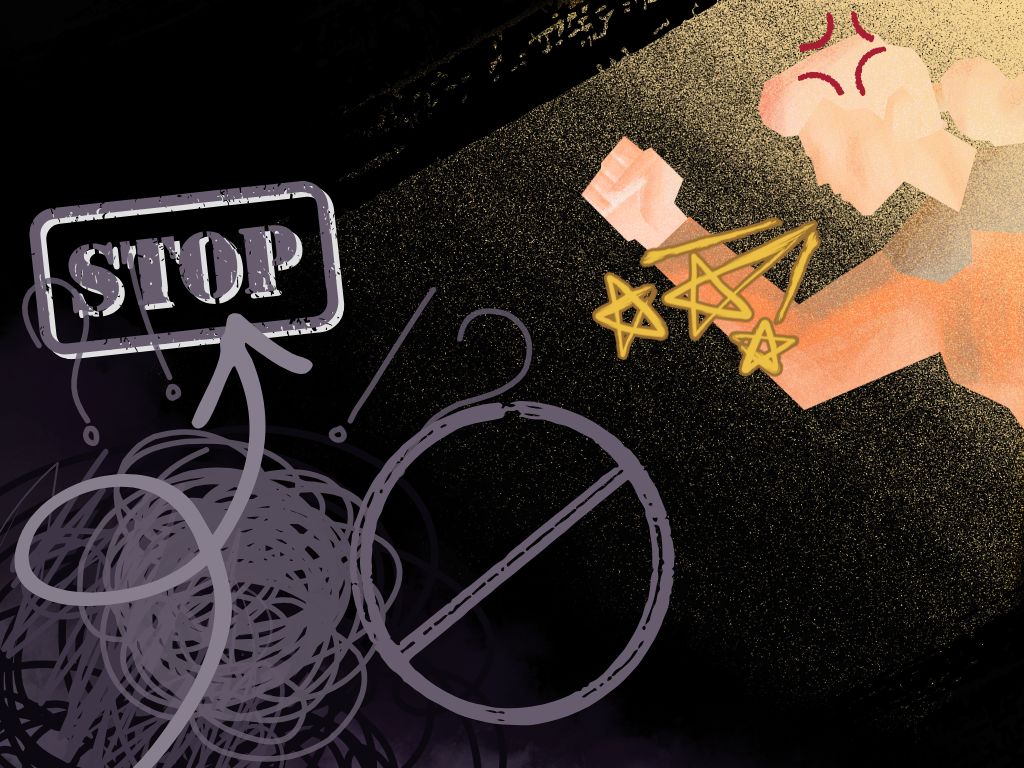
The pair burst into laughter. “You’re going to be a politician? You’d better start practicing lying now,” one joked. “Or, just get really comfortable with this bartending gig!” the other added.
I had only recently transferred majors to political science from psychology, so I was unfamiliar with this kind of response at the time. Sure, political science is an Arts degree, but still, I hadn’t expected that!
Whatever. I found it in myself to look past the comment; forgiveness came easier when I remembered that each offender was at least three drinks deep. This interaction has stayed with me, but my confidence in my major has never wavered.
I’m happy to be a student of political science, and I remain convinced that it truly was the right choice for me.
Historically, I have never kidded myself into thinking I would be a STEM girl. I was never particularly fond of biology, I suffered through chemistry and I outright loathed math. Among the majors that exist outside of the (very respectable) STEM spectrum, political science made a lot of sense to me.
Avoiding politics in this day and age is nearly impossible. Every major issue — climate change, reconciliation, housing, public health, global conflict, etc. — carries political implications that shape everyone’s daily realities. As I grew up, I became increasingly aware of how public decisions could reshape communities and individual lives. I watched politics shape the lives of people around me, and I felt a responsibility to understand the systems that drove these outcomes. Choosing political science was my way of engaging with that reality, rather than pretending I could stand outside of it.
Since 2015, jobs in Canada requiring qualifications beyond a bachelor’s degree have increased by 170 per cent. From my very first careers class in tenth grade, I understood that my educational journey was unlikely to end after my undergraduate degree. With this in mind, it never made sense to choose a major I wouldn’t enjoy or feel invested in. Why select a major I wasn’t passionate about?
As previously mentioned, political science has always held my attention. Beyond mere personal interest, the degree itself offers something incredibly practical: transferable skills. Political science develops critical thinking, effective research, communication and strong argumentation skills.
I have written more essays in the past year than I ever imagined I could, and, much to my delight, I can see my progress. Political science teaches you how to evaluate broad claims, understand political institutions and analyze the complex operation of power across political systems. These competencies matter in any profession.
In this aspect, the subject has given me — and will continue to give me — a toolkit that I can carry into other fields in the future if I so choose. It will serve me as I further my education and navigate a world where political literacy feels far from optional.
The thing about studying political science is this: you don’t do it to necessarily become entrenched in the world of politics. While some graduates do go on to work in government or policy, I believe that the degree opens far more doors than it closes.
What the critique of the subject often misses is that political science is an intentionally broad degree. Political science is built on extensive research, writing and analysis. These skills form the foundation for careers in law, public administration, consulting, journalism, communications, business, international relations and many more — paths that aren’t just diverse, but which include many well-compensated positions, contradicting the tired narrative that Arts degrees inevitably lead to low-paying or impractical jobs.
For me, journalism stands out as a natural extension of what political science has given me. I’m impartial (unsurprisingly) to the idea of pursuing it, because it feels like it will be the perfect culmination of my interests and training in the subject. Journalism demands research, curiosity, and the capacity for communication and empathy, all of which political science helps to build and refine. It is not a narrow academic path, but a versatile platform.
So, to my fellow political science students who endure the barrage of questions at family dinners and skeptical looks from curious strangers: don’t be afraid to defend our major. Remember the passion that drew you to this field, and remember its importance on the global stage.
What we study is important, and it will continue to aid us in whatever path we choose to follow in the future. And it will pay us handsomely, don’t you doubt that.
This article is a part of our Opinions section and does not necessarily reflect the views of the Gauntlet editorial board.