
Does Calgary have asbestos in its water supply?
By Daniel Rodriguez Barrios, March 5 2026—
Julian Branch is a Regina-based board member of Prevent Cancer Now, a small Ottawa NGO that focuses on cancer prevention through public education and policy. A former journalist, he began investigating the issue of asbestos contamination in the municipal water supply in 2012, after discovering that Regina had roughly 600 kilometres of asbestos-cement (AC) water pipe buried under the city.
“I started looking into it, and I discovered that we actually had a research facility at the University of Regina studying these asbestos cement water pipes,” he said. Branch is referring to a National Research Council (NRC) infrastructure research facility in Regina that produced multiple studies on AC pipes and their deterioration between 2005 and 2012.
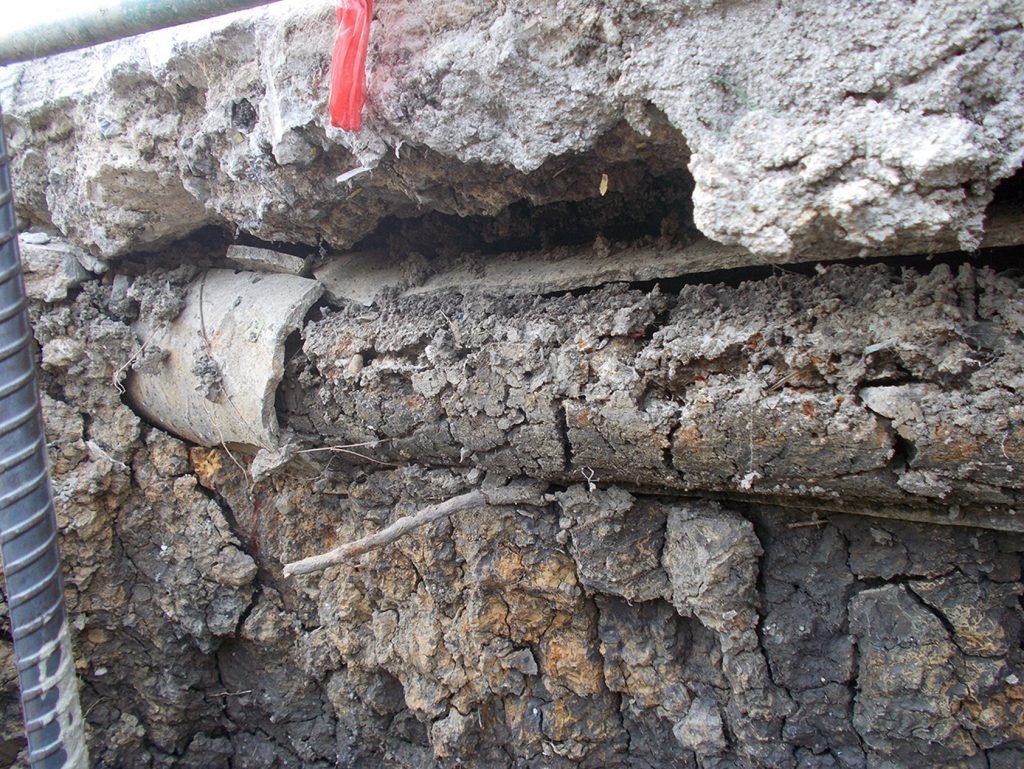
His concern is simple: AC pipes contain asbestos fibres, a known human carcinogen when inhaled. When those pipes age, deteriorate, and break, these fibres can shed into drinking water. Curiously, this exposure pathway is treated far more casually by the Canadian government than other governments around the world, including the United States.
According to a City of Calgary water-related report from 2025, Calgary’s distribution system is about 5,403 kilometres, and roughly one per cent of that is AC pipe — about 67 kilometres.
Everyone agrees on the basics: inhaled asbestos is a serious hazard and a known carcinogen. Ingested asbestos — drinking it — has been debated for decades. The U.S. Environmental Protection Agency (US EPA) regulates asbestos in drinking water. Canada, on the other hand, does not set a Maximum Acceptable Concentration (MAC) in the same way.
U.S. concern over asbestos in drinking water sharpened in the early 1970s after legal action against a major industrial source discharging asbestos-like fibres into Lake Superior, a drinking-water source for nearby communities. Over the following decades, federal agencies continued to study asbestos exposure via drinking water. In 1992, the US EPA set an enforceable national drinking-water standard for asbestos: a maximum contaminant level of 7 million fibres per litre for fibres longer than 10 micrometres. Health Canada, by contrast, does not recommend a maximum acceptable concentration for asbestos in drinking water, stating that evidence of harm from ingestion has not been shown consistently or convincingly. Branch’s question is simple — “how can it cause cancer in the U.S., and not in Canada?”
He argues the scientific record is being read selectively in Canada, and that Health Canada cites studies while downplaying the parts of those studies that show increased gastrointestinal cancers.Branch also points to the NRC research done in Regina as an overlooked Canadian contribution: studies focused on infrastructure performance that still repeatedly flag “health concerns,” including the possibility of asbestos fibre release as AC pipe deteriorates. Branch argues that this kind of language should have pushed federal health authorities to treat drinking-water asbestos as something more than just technical marginalia.
Asbestos fibres are tiny. Labs typically use microscopy and specific protocols that define which fibres count. If standards measure only fibres above a certain length, you can end up declaring water “safe” while ignoring a large quantity of shorter fibres, Branch argues. He recounts a stark anecdote from Regina. The City tested multiple years and reported no asbestos fibres detected. An investigative TV program later tested a sample taken from a particularly bad AC water main break and reported asbestos fibres in the water. Branch also notes that some jurisdictions test at, or near treatment plants before water travels through long stretches of potentially deteriorating pipe. While this testing will conclude the source water is clean, it says very little about what happens inside ageing distribution networks.
In Calgary, there are a handful of questions we residents could ask. Where are the AC pipes located? Does Calgary test for asbestos fibres during water breakages in areas with or downstream from AC pipe? Finally, what is the long-term replacement plan for AC pipes, and when can we expect it?