
The rising costs of “protecting your peace”
By Marin Ralstin, March 25 2026—
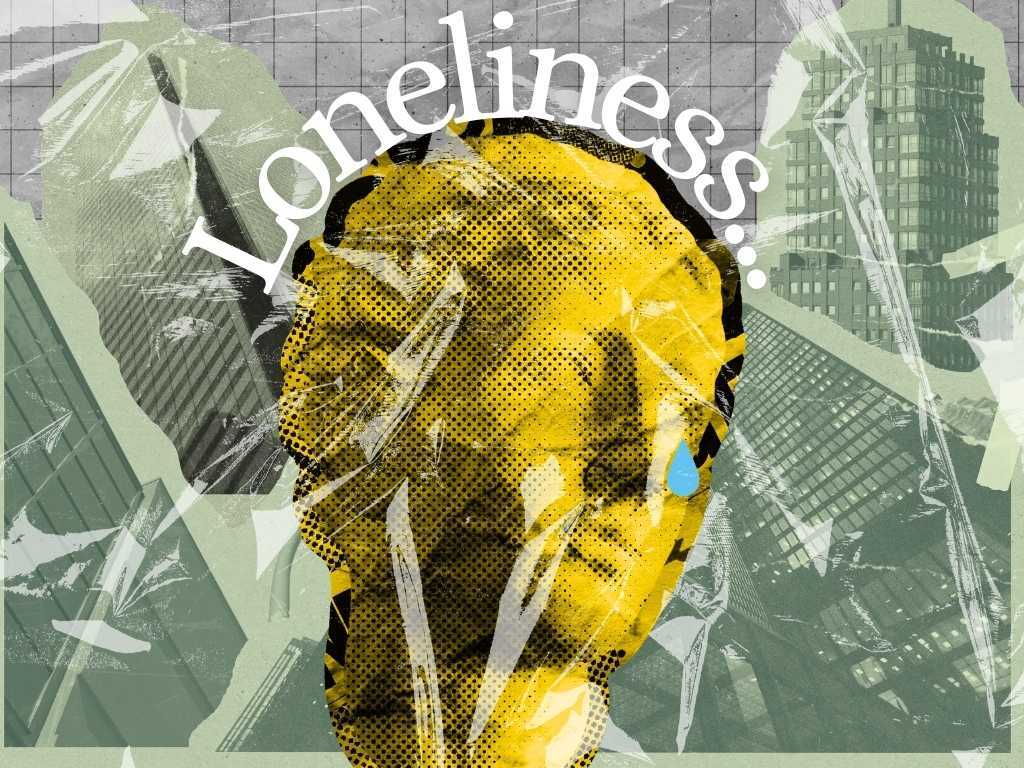
Gen Z is the loneliest generation ever, despite the fact that our world is more connected than ever before, and gratification has never been more instantaneous. Why then are young people feeling so alone, and how can we fix it?
Let me cut straight to the point. Your mom was right: it is the damn phones.
Now, don’t get me wrong, cell phones are great. Who doesn’t love having a camera in hand on the off chance you bear witness to a beautiful sunset? And I’m not completely against digitization. The move from in-person to online libraries is one I am particularly fond of. As a commuter student, I love being able to use the university library from home and write my assignments in peace, away from the distractions of loud chewers or those pesky fellow students who refuse to use headphones while watching videos in public spaces.
In many ways, digitization and the rise of individualism, by extension, is a beautiful thing. A monstrously convenient, beautiful thing.
But every rose has its thorns. For as long as cell phones have been on the rise, so too has loneliness. The combination of consumerist culture and social media is particularly disastrous for the loneliness epidemic.
A quick search on Pinterest reveals that “self care” has been branded as a uniquely individual, consumerist pursuit. Are you sad? Anxious? Depressed? Buy this face mask. And this matching loungewear set. And these cool headphones while you’re at it. Wear them any time you’re out alone. God forbid you go outside and actually speak to anyone, or even have a moment of silence to think. That’s cringe.
Walk quickly. Keep your head down. If anyone your age walks past, speed up. Look down at your phone. Act busy. Don’t you dare make eye contact. And what if another human being actually perceives you? If they look closely, they might notice just how shallow your facade of confidence truly is. It’s best if you keep walking. Speed up while you’re at it.
If you do need some time outdoors, spend one solitary hour a day pacing around while reaffirming your “hotness” to yourself, then wonder why you feel so insecure. You’re not lonely, you’re “hot girl walking.”
Do you still feel lonely? Well, check out these self-care AI prompts! Your friends don’t know you best, ChatGPT does. A quick conversation with a chat bot is sure to keep the haunting cries of isolation at bay.
What are the benefits, you ask? Why, your chat bot won’t question you. Your chat bot won’t judge you. There’s no risk of ever being embarrassed when talking to an AI, because, to ChatGPT, there are no stupid questions. In fact, the more silly questions, the better. Keep Chat relevant. Keep the money coming. You need a cake recipe? Put the cookbook down and ask Chat. You need advice? Why talk to your mother or a friend, when there’s a robotic echo chamber waiting patiently to reassure you? You’re in a fight with a friend? Why, don’t ask your loved ones for advice, and certainly don’t resolve matters by having a face-to-face conversation! Here, ask Chat to write a message for you, then scratch your head when sending a detached, ghostwritten nonsense text sends your friendship up in flames.
It’s not just AI that’s feeding our loneliness. “Mental health” content on social media has co-opted nearly every helpful therapeutic and diagnostic tool and now serves to persuade unassuming, ordinary scrollers that everyone is either an empath or a narcissist. It’s not enough that we’re all lonely, now we’re all being convinced that our most basic personality traits require a clinical diagnosis. You’re not quirky, you’re autistic. You’re not sad, you’re depressed. Heck, we’re not even eating foods we crave anymore. No, we’re all eating our “hyperfixation meals.”
The explosion of “mental health” content on social media has also led to the co-opting of the very notion of boundaries. Boundaries are no longer a healthy expression of relational compassion, they are now the therapeutic equivalent of gardening shears. At any minor inconvenience, feel free to use your boundaries to sever every pesky cord of human connection currently tethering you to the world around you. Protect your peace.
It was totally unreasonable for your best friend to expect you to show up to their birthday party, anyway. You felt a little tired! If they can’t respect your boundaries, then, clearly, they’re yet another narcissist seeking to deplete you of your life force energy. It’s best to cut them out. Talk to Chat instead. While you’re at it, why not consider an AI boyfriend or girlfriend? They can’t break your heart like a real partner, or can they?
Things that were once inextricably vulnerable and social pursuits like dating or making friends have moved online. You want community? There’s an app for that. Why risk going outside and meeting other people in public when they might not be your soulmate? It’s best to begin every relationship behind the safety of a glowing, blue-lit screen. While you’re at it, start mobile ordering every grocery item, cup of coffee, and anything else you can’t get on Amazon through contactless pickup. Why waste time speaking to the cashier at a grocery store, receiving help from the salespeople at the mall, or exchanging pleasantries with the person who made your latte? If you look them in the eye, they might expect a tip. Best to avoid speaking to strangers altogether.
Oh, that reminds me, you should really buy a smart doorbell, so you don’t have to answer the door unless you know exactly who’s on the other side. Don’t bother asking your neighbour to lend you an ingredient you forgot you needed while you bake that cake ChatGPT came up with for you earlier. UberEats delivers groceries now. Same goes for that event you’re going to on Friday. No need to ask a friend to lend you something to wear, Amazon offers rush delivery.
The message is clear: don’t ask for help, don’t be an inconvenience.
Consume in silence, then wonder why you feel so alone. Don’t take the risk of meeting people in person, chatting up a classmate, or trying to make new friends and romantic interests in real life, when it’s so much safer to do it all online.
It seems as though at every turn, with each new “convenience” that’s offered to us, we lose access to what used to be normal, inextricably human experiences. The process of borrowing items, lending a hand or inconveniencing others in any way have all been branded as somehow selfish actions that will tear all of our relationships apart It’s gotten to the point where we’re told it’s best not to ask for anything at all, especially not if it’s something we can just pay for. Why ask someone to lend you something, when you can just have it delivered to your house the next day? At the same time, many people are becoming so fearful of being selfish or inconveniencing others that they’ve stopped expecting support from their communities altogether, and have stopped providing it in return.
Thankfully, this shuttering up of our metaphorical “villages” — the intricate webs of interpersonal relationships that have long sustained humanity — doesn’t have to happen. The ironic thing about all the conveniences I’ve mentioned is just how abnormal and unnatural they are. To access many of these conveniences is to circumvent your natural instincts out of fear for embarrassing yourself.
The antidote to this is rather simple.
Instead of resorting to such a convenience as contactless pickup, go order your coffee from the person who will be making it. It can feel impossible to stop doomscrolling, but there are several ways to trick yourself out of the algorithm: setting a time limit on your apps, for example, or using an actual alarm clock instead of relying on your phone. It doesn’t mean you can’t relax, but consuming media like books or movies is far healthier than Instagram reels, and I think we all realize that by now. Or maybe you could finish those assignments you’ve been procrastinating on.
If you’re feeling lonely, go for a walk, work out, call a friend, buy a colouring book or do a puzzle. Anything but social media. When you need advice, a recipe or an answer to a question, dare to inconvenience yourself by doing your own research. Grab a cookbook from the library, or ask someone you know for help. The moment we replace human connection with artificial comforts, we lose that which makes us human in the first place, no matter how easy it might seem.
In the same vein, while I understand how easy it can be to succumb to the overwhelming urge to distract yourself in social situations, especially in a new environment or when you feel like you’ve ventured out of your depth, I’d argue that one of the greatest ways to distance yourself from feelings of insecurity, not perceiving yourself as “good enough” and wanting to compare yourself to others, is to, you guessed it, put your phone down. Especially while you’re out in public. Each time we ignore those around us in favour of doomscrolling on our phones, we rob ourselves of an opportunity to connect with others, and instead feed the insatiable monster of hyperindividuality that is always hunting for new victims.
A key piece to this is rethinking how we spend our free time, too. Do we use it as an opportunity to connect with ourselves, or do we use it as a time for distraction? Do we make plans with others, or do we substitute screen time for real human interaction?
Perhaps the most important piece of the puzzle is rethinking our perception of relationships altogether. Central to the loneliness epidemic is the idea that relationships are a burden, but giving into this extremely limited view robs us of the beauties contained in these so-called “inconveniences.”
The antidote to this fear is understanding that no matter how “convenient” and unobjectionable you might make yourself, it will never be enough to please everyone. Building a support system is difficult, and certainly, at times, inconvenient, but in the long run it is proven to have a plethora of social, physical and even economic benefits.
And remember that the world of social media is an endless cycle designed to keep you isolated. If you’re feeling lonely, there’s nothing wrong with you: it means your phone is performing its intended function. The more you can break away and reconnect with your body and mind — the physical presence of your friends — the less lonely you’ll feel.