
Alberta, Bill 2 and social control: A look into political discipline
By Rue Parmar, December 17 2025—
Despite Bill 2 being posed as an order to place teachers back in classrooms and a promise of respite to parents, it instead presents a warning to unionized workers, threatens against dissent and reveals the UCP’s true intentions regarding the people they represent.
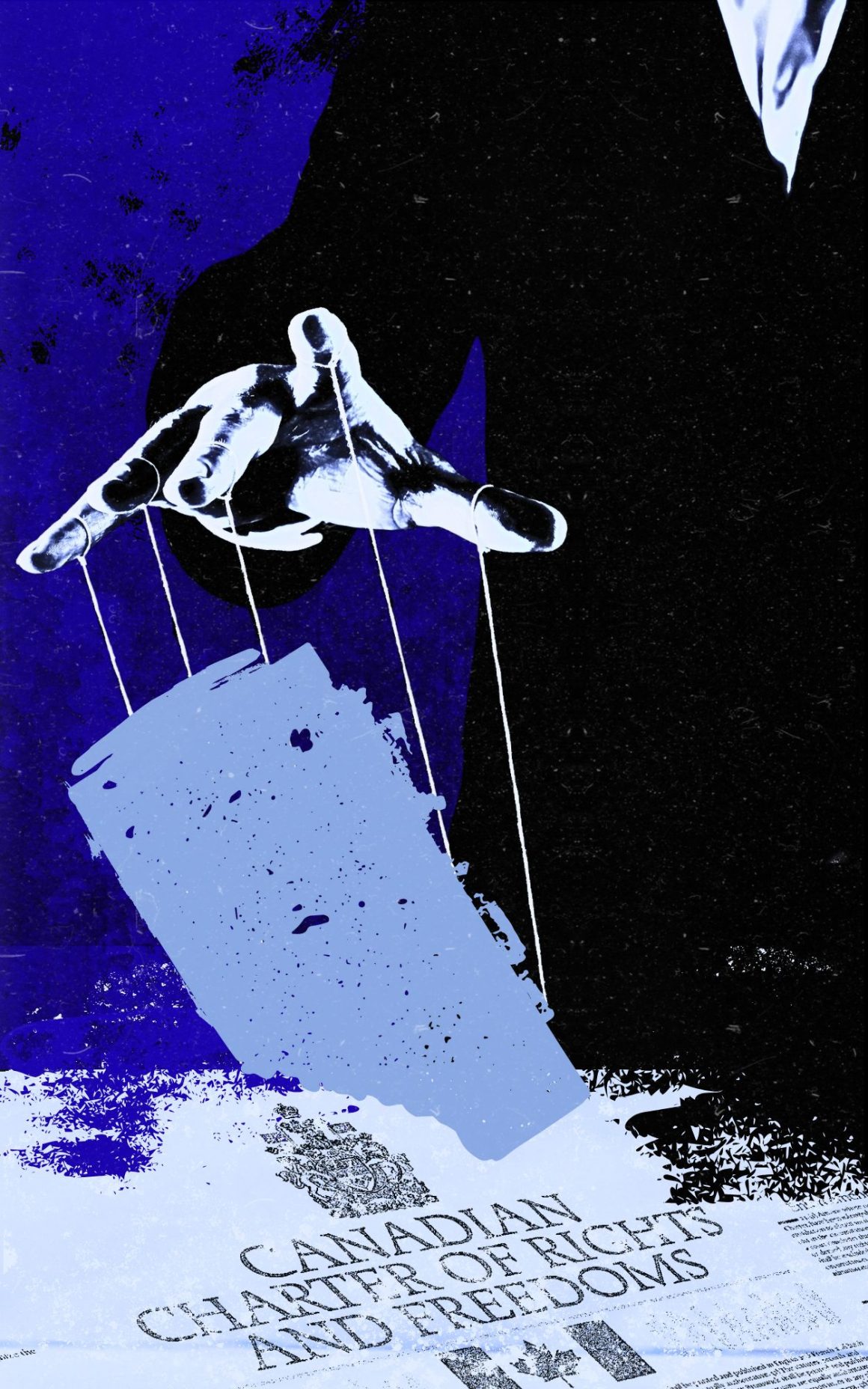
On Oct. 27, Alberta’s provincial government, the United Conservative Party (UCP), voted in favour of Bill 2, dubbed the “Back to School” act: legislation which halted all bargaining with the striking Alberta Teachers’ Association (ATA) while forcing teachers and students back into classrooms. This bill was uniquely advertised as a push to alleviate the stress parents of students were facing as a result of school closures during the strike. However, even with this idealized reframing of the legislation, the proposal and fulfillment are still controversial due to the proposed and eventual use of Section 33 of the Canadian Charter of Rights and Freedoms, colloquially known as the notwithstanding clause, which effectively shields the province from legal opposition and makes the principles of the act seem absolute and undeniable.
What the bill officially sets out is a long-term work contract for teachers ranging from Sept. 1, 2024, to Aug. 31, 2028. It promises a 12 per cent rise in salary over four years, the addition of 3,000 teachers and 1,500 teaching aides, and an overall 17 per cent market adjustment via a unified salary grid. However, this new deal negates the serious concerns raised by teachers during their striking period about the decrease in quality of education due to large class sizes, which produce problematic learning environments where teachers cannot cover their curriculum in depth and where students get limited, if any, individual support during class time.
On the individual scale, those under a teaching contract will be fined $500 per day if they are absent from classes. On the institutional level, organizations which do not comply with the bill will be charged $500,000 per day.
On Nov. 6, the ATA filed an injunction to the Alberta Court of King’s Bench to challenge the use of Section 33, with ATA President Jason Schilling personally stating that the use of the notwithstanding clause is “an abuse of power.”
The bill is being criticized not only for the harm it has done to Albertan teachers today, but the harm it implies to all other workers under any union or who do not share the same political views of the current government. This is the first of a handful of bills which the province has promised to use Section 33 on, all concerning the rights of transgender youth, proving exactly where the priorities of the province lay: in forcing their dogma onto the Albertan peoples instead of supporting them.
On social media, there are mixed opinions about the impact the Back to School act has had on teachers: some view this action as a necessary evil, while others view it as a violation of teachers’ rights. Regardless, there is a common sentiment of fear and worry amongst Albertans regarding how future strikes will be played out in this new climate.
As per the actions of our government, it is evident that the forceful cease of both absent striking and peaceful bargaining, with no possibility of arbitration, is a warning to any other labour unions which wish to advocate for change. It sets the precedent that if a labour union does not reach an agreement with the government that fits their ideology, then they will use force to end the discussion at their own benefit.
In the case of teachers, the straw which broke the camel’s back was the neglected proposal of a “classroom size cap.” This was at the forefront of the association’s campaign, as the steadily increasing size of classrooms has lowered the level of support students can receive, creates an unattainable workload for teachers and exacerbates inevitable classroom tensions. However, as fixing this issue would imply more government funding being allocated to educational infrastructure and staffing, the capitalistic and conservative Smith administration strongly opposed the cap, to the surprise of none.
This whole situation has made it abundantly clear that Alberta’s government will not bat an eye at enforcing heavy restrictions and constitutional encroachment to impose its right-wing values on the people. Now, we’re forced to ask the question: To what extent is the province willing to use this charter clause to force its citizens — especially those who don’t align with identity politics or aren’t in the same political quadrant — to remain compliant? To what extent will they restrict Canadians from their promised right to dissent or protest? It will be incredibly difficult for the Smith administration to regain the trust of Albertans after these decisions, especially if the people feel that the threat of force remains looming.
Currently, three separate bills are projected to also be passed under the notwithstanding clause regarding gendered pronouns and sports in schools, as well as affirming healthcare for transgender youth. In most conservative spheres, gender queerness and a rejection of the patriarchy is a direct violation of the status quo, which their ideal society is based upon. Sexuality and gender have remained a prevalent talking point in Canadian politics since the second wave of feminism in the 1970s and 80s, and to see government push-back on the grounds of maintaining an arbitrary status quo — which is not based on objective criteria in any context — proves that the UCP has placed their political interests above the wellbeing of Albertans. In this case, transgender youth, one of the most vulnerable groups of people, have been put in harm’s way to satisfy the perfect, conservative Albertan image.
The warning signs and active impacts the Back to School act have brought upon civilians is not a peaceful means of ending unruliness: it is an evident form of social control. It is a manipulation of the public through the means of deterrence, and the UCP’s actions show that this manipulation is exactly the intent which it stands to protect. Not the wellbeing of its citizens, and not the safety of their children.
Clearly, our government intends to continue using extreme policies to keep us in-check, as they see fit, and to silently accept the conditions of their dystopian society.
This article is a part of our Opinions section and does not necessarily reflect the views of the Gauntlet editorial board.