
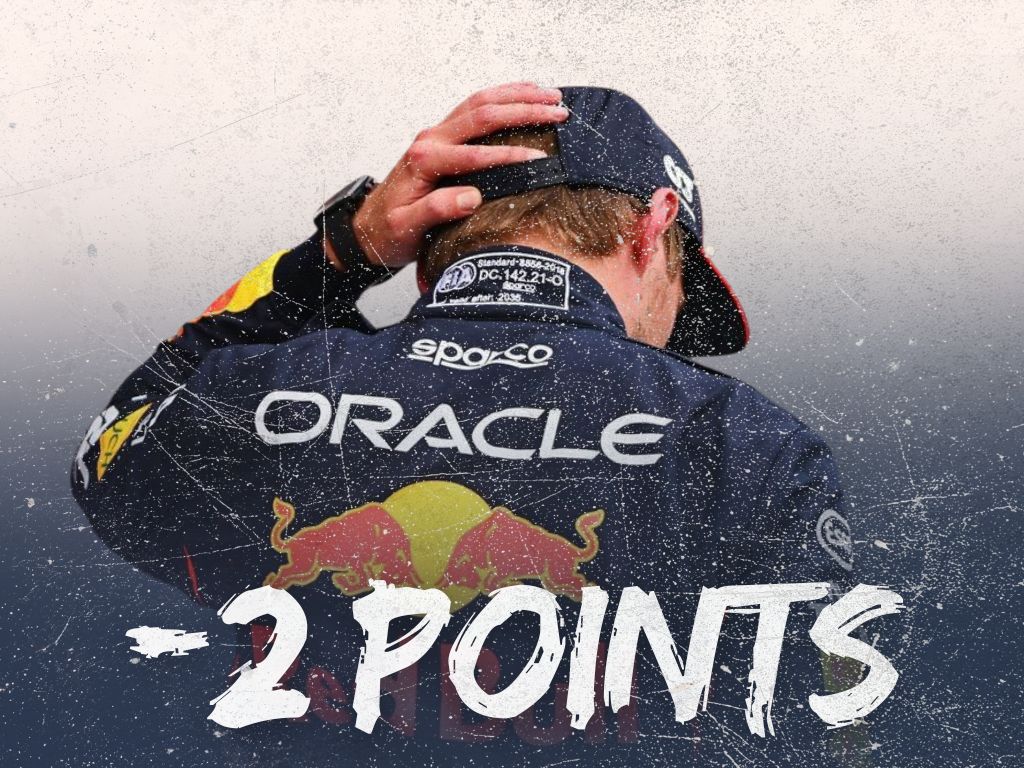
Two points short: Inside Max Verstappen’s near-perfect 2025 comeback
By Amitoj Hari, February 25 2026—
As the 2025 season of Formula One came to a close on Dec. 7, 2025, Max Verstappen stood on the top step of the podium, but still missed out on his fifth-straight World Drivers’ Championship. The Dutchman delivered a historic campaign, recovering from a 104 point deficit after Zandvoort, only to fall short by 2 points in Abu Dhabi.
It was a finish that felt as excruciating as it was poetic, a reminder that dominance is never guaranteed and the smallest of errors decide legacies.
The season began with mastery from McLaren opposing the instability and inconsistency from Red Bull. This early balance allowed for relatively clean weekends for McLaren’s Lando Norris and Oscar Piastri, who converted strong qualifying performances into wins and podiums. Meanwhile, Verstappen was forced into damage-limitation mode, only scoring wins in Suzuka and Imola through defiant race craft combined with a little luck.
Nonetheless, with the two McLarens leading the grid and Red Bull lacking any formidable response, the gap on the leaderboard grew rapidly.
The contrast between the two teams was stark. McLaren’s controversial “Papaya Rules” made the audience question favouritism amongst management, but there was no denying that the team had developed an absolute rocket in their MCL39. On the other hand, the fall out from the year prior continued to plague Red Bull; Verstappen lacked consistent support from the second car, even after the swap between Liam Larsson and Yuki Tsunoda. Red Bull’s technical dominance also softened this year due to staff turnover and development recalibration. With the loss of their chief technical officer, Adrian Newey, and the end of their relationship with engine manufacturer Honda, the car became less and less competitive as the season went on.
At the mid-point in the calendar, the championship appeared settled however, what followed was not just a collapse from McLaren, but a rebirth for Max Verstappen.
After getting edged out by Piastri at his home race, Verstappen’s approach shifted. He went from trying to extract as many points as he could each Sunday, to putting up performances reminiscent of the early 2024 season. Post-Zandvoort, Verstappen won 6 races, 2 sprints and stood on every podium. His 238 points in the last 10 races not only allowed him to break the McLaren stronghold of the top two positions on the drivers’ leaderboard, but he also clinched third place in the World Constructer’s Championship for Red Bull.
As Verstappen found his rhythm, McLaren faced a different challenge. Despite Norris leading in the standings, Piastri’s hunger added complexity to the title fight. McLaren had to balance two competitive drivers, a sharp contrast with Verstappen’s position as the undisputed centre of Red Bulls’ championship hopes. This difference showed in moments like Qatar, where McLaren stayed out under an early safety car to prevent having to double stack, while Red Bull, guided by Principal Strategy Engineer Hannah Schmitz, pitted Verstappen which ultimately won him the race.
By the time the championship reached Abu Dhabi, the margins had collapsed entirely. However, Verstappen’s championship relied not only on his success, but Norris’ and Piastri’s failures. He went out that weekend, secured the pole and the win. But as Norris crossed the line behind him in 4th place, the championship fell out of his grasp.
Verstappen left it all on the track, and it still wasn’t enough, leaving fans wondering what could have been. What if George Russell and Verstappen hadn’t collided in Spain? What if Kimi Antonelli hadn’t let Norris through in Qatar? What if Charles Leclerc’s Ferrari had the pace to catch Norris in the final laps at Yas Marina? In a season decided by such razor-thin margins, every possibility looms heavily.
Ultimately, the history books will commemorate Lando Norris’ maiden World Driver’s Championship, earned through ruthless skill and consistency. But the people will remember this as the year of a near-perfect comeback from Max Verstappen; it may not have added another title, but will forever stand as one of the most demanding and revealing of his career.
In a sport that often equates greatness with accolades, 2025 offers a different lesson. Sometimes, the seasons that distinguish the greats from the rest of the grid are not the ones won easily, but the ones where each point was fought for until the very end.