
The Dilemma of the WNBA CBA negotiations
By Ziga Poromon, February 23 2026—
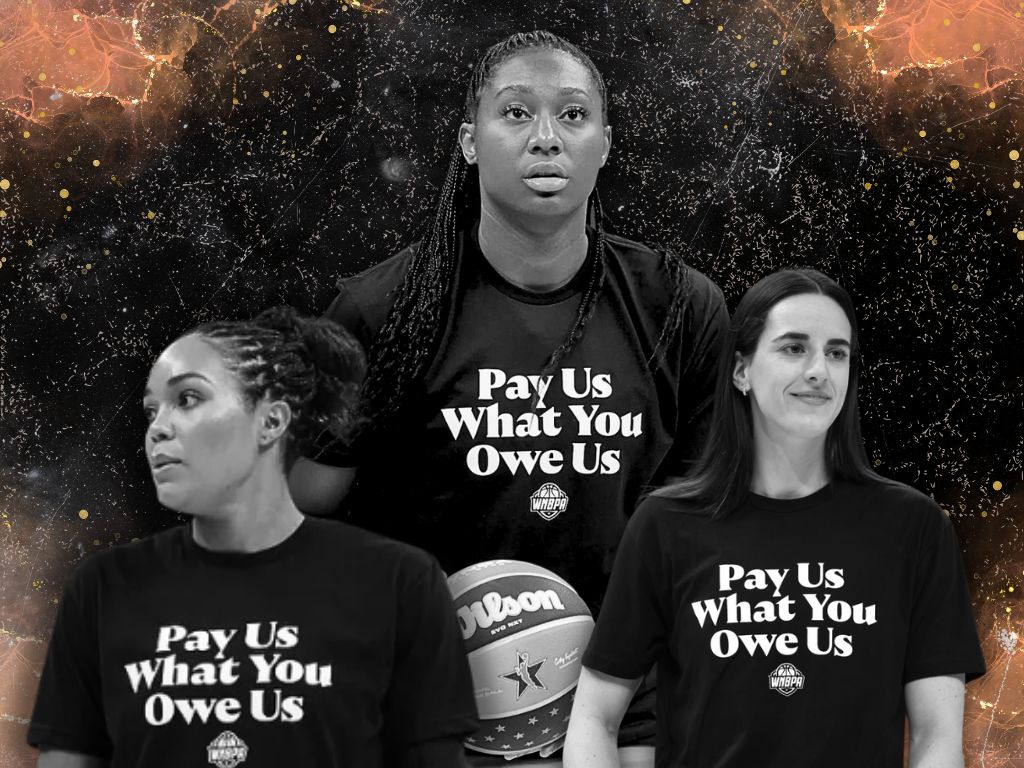
During the 2025 WNBA All-Star Weekend, players wore shirts reading “Pay Us What You What You Owe Us” in protest of stagnant compensation under the league’s current Collective Bargaining Agreement (CBA). Negotiations have extended well beyond the October 31 deadline, as the WNBA Players Association (WNBPA) remains locked in a season-long dispute with Commissioner Cathy Engelbert and team owners.
Players are pushing for a revenue-sharing model similar to the NBA’s, which they argue would fairly reflect the league’s growth. Their demands include higher salaries, codified charter travel, improved retirement benefits, family planning and pregnancy benefits and better practice facilities and game standards. The WNBA has seen increased investment and visibility in recent years, highlighted by a $2.2 billion media rights agreement set to begin in 2026. However, players argue that they have not meaningfully benefited from this growth. Under the current CBA, the maximum salary sits around $250,000, while the league’s recent proposal introduces an $850,000 supermax salary.
The infamous exit interview
At the end of the season, Minnesota Lynx star Nepheesa Collier used her exit interview to publicly call out Commissioner Engelbert for poor leadership and negligence. Many players, including the Chicago Sky’s Angel Reese and Los Angeles Sparks forward Dearica Hamby, showed their support for Collier on social media.
Engelbert, who is employed by NBA Commissioner Adam Silver and WNBA team owners, has been defended by ownership throughout the negotiation process. Collier stated that the league has “the best players and fans in the world,” but added that “right now, we have the worst leadership in the world. The players know their value even if the league does not.”
Collier’s criticism of Engelbert reveals a larger issue surrounding CBA negotiations. Since investors raised $75 million in capital in 2022, Engelbert has been criticized for undermining the value of the WNBA. The Golden State Valkyries were the WNBA’s first expansion team in 15 years and set attendance records and a $250 million expansion fee. Toronto and Portland are set to debut their new teams in 2026, with Cleveland, Detroit and Philadelphia joining the league in the next four years. Over the past few years, the league has basked in record-breaking viewership and game attendance, a $2.2 billion media rights deal and a rise in popularity thanks to budding stars Angel Reese and Caitlin Clark. In 2024, the WNBPA opted out of the CBA agreement for a model that reflected the growth and success of the league.
Both sides have disagreed on an appropriate revenue-sharing model that would increase player salaries and the WNBA’s ability to make more money. The third CBA extension passed on January 9, as the WNBPA accuses the league of endangering the livelihoods of players and trust of fans and failing to compensate players for their work. The league claims to support fan engagement, player safety and increased salaries, while prioritizing long-term growth.
Current CBA negotiations
The NBA operates on a basketball-related income that gives players a share of earnings made from ticket sales, merchandise, broadcast deals and sponsorships. The current WNBA revenue model is based on a trigger system that would give players a share of the business if they hit certain revenue benchmarks. However, the current CBA was created before the COVID-19 pandemic, so the triggers weren’t activated since there was a limit on the number of fans allowed to attend games. This has set the WNBA business model behind in allowing players to benefit from the league’s growth.
Paige Bueckers, who was the #1 pick of the 2025 WNBA Draft, was expected to earn $78,831 in her first year, whereas the first pick of the NBA Draft is expected to earn $13.8 million. Bueckers is expected to make more money in one year in the 3×3 league, Unrivaled, than in her first four years in the WNBA. Nearing the maximum base salary of the WNBA, the average salary in Unrivaled is $220,000, the highest average salary of any professional women’s sport league.
As of Nov. 18, 2025, the latest CBA proposal includes a revenue-sharing model that would allow more than 180 players to earn a maximum salary of more than $1 million in the first year of the deal. The proposal outlines an average maximum salary of $460,000 and a minimum salary of $220,000, both of which would increase over time. Although the salary cap would increase, the “middle class” players, who aren’t on rookie contracts or the top veteran players. This could lead to top players taking pay deductions to allow their team to stay competitive and keep “middle class” players, or risk tactical depth to prioritize top players. “Middle-class” players like Aces guard Dana Evans would receive a lower percentage of revenue, so “we have to make sure it’s equal all across, while making sure our stars are well taken care of.”
Despite these changes, the WNBPA remains unconvinced. Players favour a salary system where the salary cap is directly tied to basketball-related revenue, rather than a fixed structure. This is not unprecedented; the previous CBA negotiations in 2019 also extended beyond their expiration date and were ultimately settled in early 2020.
Is the WNBA under threat?
Overseas opportunities are becoming increasingly attractive to WNBA players, often offering higher salaries and better benefits. Recently, WNBPA President and 10-time All-Star Arike Ogwumike, along with six-time All-Star Alyssa Thomas, signed with a new, Saudi-backed women’s league called Project B, set to launch in the fall of 2026.
Project B will operate in a format similar to Formula 1, with six teams competing in tournaments across several continents, including Asia, Latin America and Europe. The league is backed by powerhouse investors such as three-time WNBA Champion Candace Parker and tennis star Novak Djokovic. Former WNBA All-Star Alana Beard will serve as the Chief Basketball Officer. Players are expected to receive equity stakes and salaries are projected to exceed both the WNBA and Unrivaled.
Project B will compete with Unrivaled — a 3×3 league founded by Napheesa Collier and Breanna Stewart — as well as Athletes Unlimited, both of which operate during the WNBA offseason.
Saudi Arabia’s Public Investment Fund (PIF) is supporting the league through its entertainment subsidiary, Sela. Though the PIF claims they operate on pillars of inclusivity, Saudi Arabia has been scrutinized for its human rights abuses and is being accused of sports washing as their ventures have reached other sports like tennis, soccer and boxing.
As women’s basketball players gain more alternatives for professional careers, the WNBA faces increasing pressure to remain competitive. Without a more favourable agreement for players, the league risks losing top talent to international and alternative leagues. While long regarded as the top women’s basketball league in the world, that title is slowly slipping away and may be on the brink of collapse if radical changes are not made to honour and respect their players.