
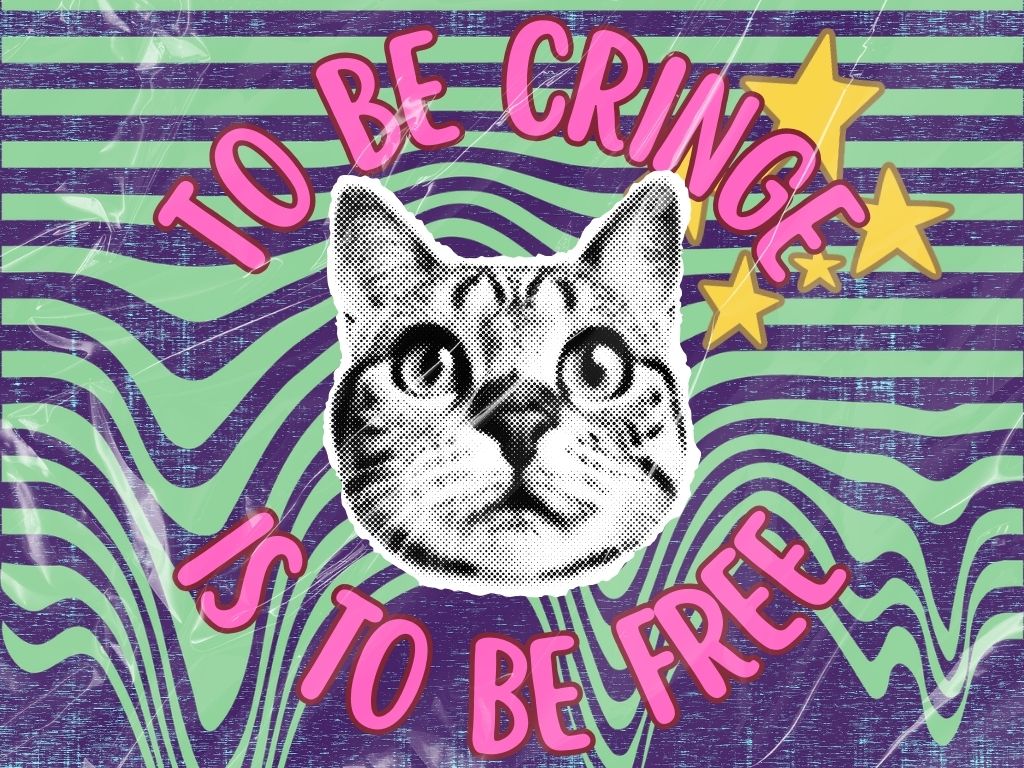
Why you need to abandon cringe culture
By Emily Cook, February 25 2026—
Have you ever seen something so awkward that you had to step away, turn off the video or scroll past it? Or maybe you stuck around and laughed at the video, mocking the person within it alongside fellow viewers in the comments?
Did you ever think about why that was your reaction?
Maybe it was the second-hand embarrassment you just couldn’t stand. Maybe their mannerisms were off-putting for some reason and you wanted to know if others felt the same way. Or maybe you saw behaviours you consider weird, strange or incorrect and you were baffled that someone would act like that and willingly post it.
If you’ve done any of that, and it’s likely that you have, you’ve engaged in “cringe culture.”
What is cringe culture?
Cringe has two main forms: verb and adjective. The former — an embarrassed or uncomfortable recoiling in response to something awkward — is an internal, self-described and relative sensation. It’s more focused on an individual’s reaction than the act that made them cringe. As a result, it’s often more sympathetic, especially if the act was committed by a friend or family member, with the person cringing wanting to alleviate some of that discomfort.
But the adjective form becomes an external descriptor, a label attached to someone else because the labeller deems their behaviour incorrect in some manner. This is highly subjective, depending on the groups you identify with, the way you grew up and how you respond to discomfort. This can quickly become a way to humiliate people — a way to relish in someone being “put in their place” — because how could they do/post something so unaware? How could they not know the ever-changing parameters of what is cringey and unacceptable?
Fundamentally, cringe culture is a collective labelling of content and behaviour that evokes embarrassment, discomfort and/or awkwardness. This is largely subjective on an individual level, but most groups tend to share certain conceptions of cringe, which typically involves the belittling of opposing opinions or those who don’t accept the group’s norms.
Think of “wokeness”: a label given to the actions and beliefs of leftists, people who appear left-leaning or even sometimes centrists by right-wingers. The phrase may be common vernacular by now, but it lacks a consistent appearance and is thus hard to describe. It’s a dismissive term, meant to reduce the beliefs and actions of the labelled to a ridiculous and lesser position not worthy of consideration.
The cringe label is largely applied to anyone who doesn’t fit into Western behavioural norms, the ways of being that many people are taught to adhere to which are socially acceptable, expected and “normal.” Think of those who deviate from the cisgender, heterosexual, neurotypical, able-bodied “standard,” or those who have non-conventional interests such as furries or fanfiction writers.
Cringe culture exists to establish the in-group and the out-group, what behaviours are and are not acceptable, and who is allowed to do what. These distinctions are the main reasons cringe can be rooted in empathy or in disdain depending on the context. The familiarity you feel for someone determines how willing you are to give someone the benefit of the doubt, and how willing you are to defend them.
Why do people engage in cringe culture?
There are many reasons for engagement, whether conscious or otherwise. On an internal level, maybe witnessing someone awkwardly lip-sync to an outdated song or overshare to an uncaring audience is cathartic: a “better you than me” mindset that creates distinction between the viewer and the viewed. You get the satisfaction of someone else failing while feeling as though you are superior to the other person. There’s no fear of being cast out because you are engaging on the “proper side” of cringe, acting as the viewer and not the viewed.
Alongside that, engaging in bashing and shaming cringey creators and creations can affirm your biases and beliefs about that group or the content. Sometimes this simply feels good: knowing you were “right” and seeing so many people agree with you. But it’s hardly innocent, and can quickly become outright hateful and discriminatory.
Another reason, and often the reason people casually engage in cringe culture even without knowing, is the pure entertainment value.
Whether it matches your humor or it’s just so absurd it’s funny, something about people bumbling around and making a fool of themselves online can be hilarious. This is often a middle ground of sympathy and contempt, where you participate in mocking the content creator but don’t attempt to do so maliciously. There’s a fine line here that often comes down to your internal biases and the beliefs you already have: if they are largely positive, then the content is entertaining but the creator is still deserving of sympathy, but if your beliefs are mostly negative, your view of the content becomes malicious and demeaning.
Most of the time, you start to like the content if it’s entertaining enough. On the other hand, it can easily become entertaining because you hated it in the first place. This is what’s referred to as “hate-watching,” and its appeal and consequences vary significantly depending on why or what you’re watching. Your motives could be mocking normalized practices within your community or culture, such as arranged marriage or other dating rituals, because you aren’t allowed to in other scenarios. This can be a cathartic practice, less about feeling superior and more about having an outlet to express your true opinions on a societal practice when doing so in real life is restricted or frowned upon.
Alternatively, and herein lies the true danger of cringe culture, you could also be harbouring a distaste or straight-up hatred for the people or content you’re consuming. Despite your intentions, your hate-watching could be simply reaffirming your values. A prime example of this is cringey TikTok compilations, especially those that focus on specific political ideologies or identities, like leftists, right-wingers or queer people. These compilations are built to be hate-watched, framing the individuals and their identities as inferior and worth mocking.
The final motive, more external than the rest, is social regulation. People reinforce social norms everywhere at all times at all levels of society, and online spaces are no exception.
Online and offline norms can be very different, but they often involve the things people can say, who can appear in what context and how people behave. The internet is highly visible and thus almost all behaviour is policed by those you interact with, though this often isn’t noticed until it becomes an issue. This is especially true for dynamics surrounding and within online groups, where certain people can do certain things and those who violate this set-up are given the moniker of “cringey.” Think of spaces, like Discord or Reddit, with moderators: if someone tried to regulate, ban or police another person’s behaviour and they weren’t a moderator, they’d likely be shunned, ignored, mocked, or even made into a meme for violating the conventions of the group, even if those conventions are not communicated clearly.
A clear example of this, present both online and offline, is the “Karen” meme. While its origins are hard to pin down, the recurring image of the meme is that of a middle-aged white woman “asking for a manager” or even calling the police on people in neighbourhoods and stores. She takes the role of “social moderator” too far, going beyond the standard of acceptable social regulation, which doesn’t normally involve calling the authorities. And while sometimes these videos can be useful in highlighting discriminatory behaviour, it simultaneously encourages a norm of complacency, telling people – especially women – not to speak out or complain, even when the situation absolutely calls for it.
What are the dangers of cringe culture?
While cringe culture may seem entertaining and innocent at a first glance, it can quickly get out of hand. Personal biases and internalized hate are suddenly given outlets which are very hard to moderate or restrict. These spaces can form an echo chamber as people within a group parrot discriminatory ideas that can, and have, caused actual harm.
Having grown up with warnings about online bullying and harassment, cringe culture appears very similar to the practices we were warned about. However, due to its online nature, consequences for engaging in such behaviours are minimal, largely ineffective and hard to dole out in the first place. People can claim satire or that they were joking, turning an accusation around on the accuser and calling them “sensitive” while completely derailing and avoiding the argument.
This is particularly dangerous with how young many internet users are. Constant consumption of cringe culture can promote discriminatory beliefs about those targeted, even if those beliefs weren’t there to begin with. And this hatred rarely stays online.
In other instances, this “harmless” discrimination can become internalized by internet users, resulting in higher self-regulation and possible self-hatred due to the fear that one’s interests and behaviours are unacceptable and cannot be known or seen by other people, lest it become a subject of endless mockery.
And the people often targeted are some of the most vulnerable groups: disabled people, neurodivergent people (especially those with autism), queer people and people in racial minorities. Online spaces are often the few places these people feel they can be themselves in a world where in-person marginalization is all-too common, but cringe culture poisons these safe spaces and gives cruel people a whole new avenue to make fun of them. From improperly communicating norms to outright denying access to certain spaces, these groups are forced to navigate what modern culture they can with high levels of self-regulation and an oppressive fear of retaliation.
So what can you do about it?
It is simple: we must abandon cringe culture altogether.
Both the internal and external negative manifestations of cringe culture should be pushed aside and replaced with empathy and the desire to understand minority groups instead of violently maintaining the status quo.
Being able to recognize the effects of cringe culture is crucial, especially within groups you associate with online and your internal reactions offline. It’s easiest to recognize your own discomfort by first acknowledging it and then working to remove it. This is not just a cringe-specific process, as many people carry biases they don’t realize they’ve learned, but the obviousness of the embarrassment and awkwardness makes it easier to pick up on.
Alongside that, letting yourself experience what others might label cringe, especially regarding your own interests or behaviours, can feel very freeing. This too helps us work through internalized biases and curb our embarrassment about engaging in what we actually enjoy.
You can easily learn to recognize the more discriminatory practices of cringe culture in how people speak, both within your personal circles and online, and avoid them like the plague. This can prevent you from absorbing and parroting negative stereotypes with little thought.
With all this in mind, you should hold people within your life to this same standard: correct people when it’s necessary — especially your friends and family, to whom your input will mean more than that of online personalities or politicians — and encourage them to do their own internal homework.
Cringe culture is a new and ever-evolving phenomenon, but it’s imperative that we learn how to recognize the negative consequences of it going unchecked in order to ensure the safety of the online spaces which so many vulnerable communities rely on nowadays.
This article is a part of our Opinions section and does not necessarily reflect the views of the Gauntlet editorial board.