
My time studying abroad in Spain
By Anjali Patel, October 29 2025—
Being a part of the Food and Culture in Spain group study program gave me insight into how meals reflect identity, tell stories and, most importantly, create a sense of community. This trip changed the way I viewed travel, history and even the everyday meals I eat at home. While the program focused on exploring Spanish culture through cuisine, I quickly realized that food is deeply connected to everything, from the land to local traditions. Whether I spent my night eating pintxos in San Sebastian, hiking through coastal hills or visiting wineries, I discovered that culture is something you feel, taste and see.
Our journey began in Madrid, the vibrant capital of Spain. One of the first stops on the trip was Botín, the world’s oldest operating restaurant. Since 1725, Botín has been serving its famous roasted suckling pig using the same wood-fired oven. The smell of smoke filled the air, the walls lined with portraits of past chefs and every corner echoed the past generations. While many of us were hesitant about the suckling pig dish, it quickly became clear that dining at Botin was not about the food — it was about participating in Spanish tradition.
Not far from Botín, we explored Mercado de San Miguel, a busy food market offering a glimpse into the everyday rhythms of Madrid. The market was full of energy and colours, with stalls selling everything from fresh eel to jamón to mini cheesecakes. Though the market was packed with tourists, it still held its authentic roots, with small family-owned businesses that told stories of their regional identity. This was one of the moments I realized food in Spain is more than a meal, it’s how people come together as a community, where culture and daily life intersect.
From Madrid, we traveled north to Vitoria, a quieter town in the Basque Country of Spain. The slower pace of Vitoria allowed us to take everything in more thoughtfully and have time to relax from our busy schedule. One of the most memorable visits was to Bodegas Bilbainas, Spain’s oldest bottling winery. We toured the underground cellars and learned how their wine is made using the same centuries-old methods. But what stood out to me the most was their commitment to sustainability. They use sheep feces as soil enrichment, reuse wine barrels by reselling them to the whiskey industry and manage their resources to reduce their waste. In Spain, wine was not just a drink to pair with your dinner, it tells a story of labour and tradition of the Basque region.
Close to Bodegas Bibanias was Nublo, a Michelin-starred restaurant in Haro, located in a 16th-century palace. At Nublo, everything was cooked over an open fire, right in front of us. They use only locally sourced ingredients, reflecting their respect for the Basque region’s culinary traditions. While the dishes were beautifully plated, what resonated most with me was the focus on seasonal eating and sustainability. The visit to Nublo helped me value where my food comes from, who grows it or makes it, honouring those sustainable practices to make mindful choices.
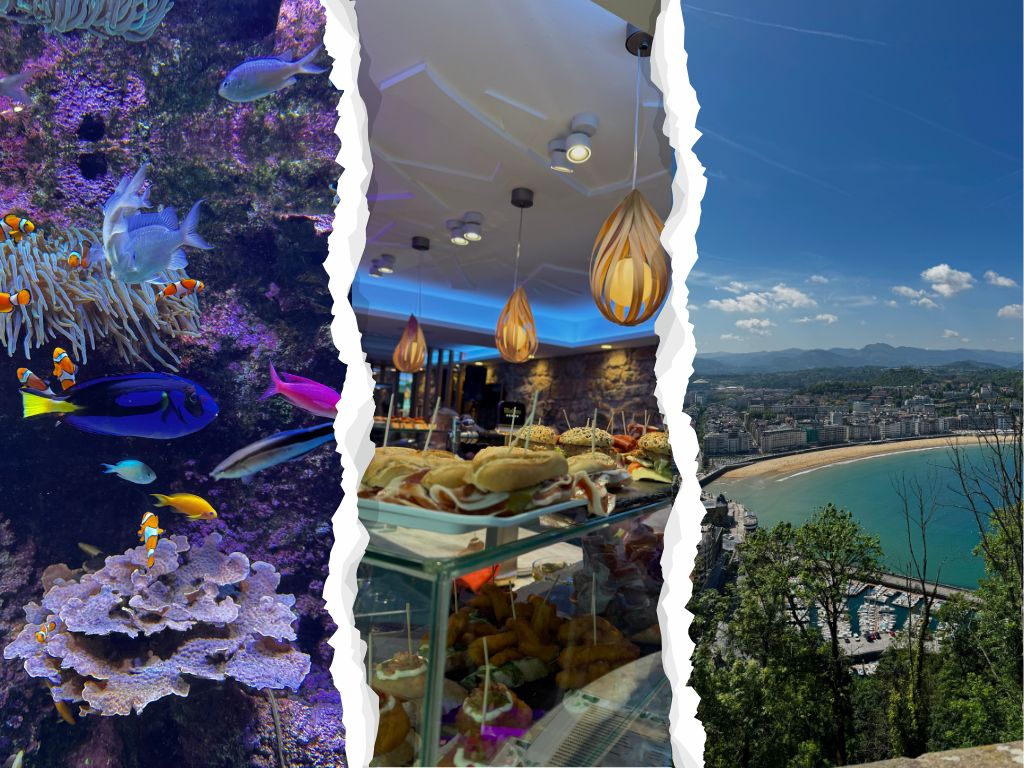
Our next stop was San Sebastián, where we had one full free day, and we took that opportunity to hike Mount Urgull, taking in the views of the ocean and the rolling green hills. That same day, we visited the San Sebastián Aquarium, where the 360-degree underwater tunnel gave us an up-close look at the marine life.
Later, we stopped at La Viña, a local bakery in the heart of San Sebastián, famous for inventing Basque Cheesecake. The Basque-style cheesecake is unlike any dessert I have tried. With its caramelized top and creamy cheesy center, it’s a trending dessert and there’s no better place to try it than its origin. Tasting it at La Vina was a major highlight of my trip. It was an experience that tied flavour and tradition together.
Of course, no visit to Spain would be complete without pintxo bar hopping, a famous social ritual that defines Spain’s social life. We followed the rhythm of the locals, grabbed one or two pintxos, sipped on a drink, chatted, laughed, then repeated at the next bar. It was such a fun and immersive experience, allowing us to truly experience local living in San Sebastián. My favourite pintxo was a simple one, with tortilla española on a piece of baguette. It was amazing how something so simple could feel so meaningful, and I will be coming back to try more pintxos.
Looking back, this program gave me more than a taste of the Spanish cuisine and culture. It gave me a new way of thinking about food entirely. I came to understand that food is deeply tied to family, community, tradition and sustainability. It carries values, tells stories and reflects the choices we make as global citizens.
Coming back to Canada, I find myself to be more thoughtful about how my food is grown, produced and shared. This study abroad showed me how to embrace my food and culture more fully, and I am more careful about the choices I make and the values behind them.
Learn more about study abroad opportunities at UCalgary on their website.