
Showing up for the island
By Daniel Rodriguez Barrios, April 25 2026—
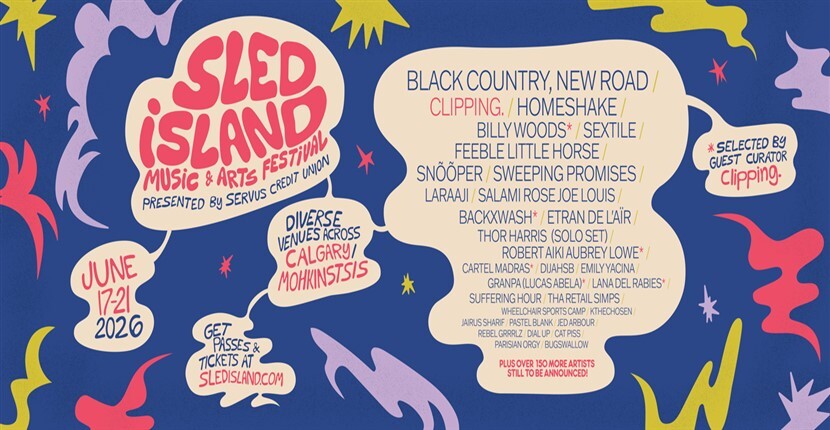
On Friday, Nov. 28, 2025, Dickens in Calgary hosted “Show up For the Island!”, a fundraising concert for the Sled Island Music & Arts Festival. At the fundraiser, marketing and communications lead Curtis Greger put it bluntly explaining how Sled Island raises money for the festival.
“Sled Island relies on donors…[and] charitable giving, or it doesn’t actually work,”
Adding that only “20–25%” of Sled’s annual revenue comes from ticket sales, with the rest coming from grants, government funding, and donors. Festival manager, Hemen Torek-Agbidye remarked on the festival’s scale; 200+ acts across 20+ venues with just four full-time staff, assisted by seasonal hires later in the year and a network of volunteers. Greger also pointed to broader pressures that affect who can be booked and how far budgets go, including the valuation of the U.S. dollar; which can make international bookings challenging. That gap is one reason Sled leans on off-season cover fees, campaigns, and fundraising events like that of November 28th.
“Show up For the Island at Dickens” showcased both local and overseas artists in typical Sled Island fashion. The bill on Nov. 28 featured Mauvey, Sunglaciers, Teafannie, and Shy Friend, along with merch tables and a custom 2026 calendar sold to support festival operations. Dickens, Torek-Agbidye noted, has long been one of the festival’s key rooms; he grouped it with other venues that function as part of Sled’s broader ecosystem, including Palomino, the Legion, and Ship & Anchor.
And yet, the night wasn’t only a call for support. Interviews with the night’s artists kept circling back to the night’s typification of Calgary’s music scene: a place where crowds show up, whose festivals act as connective tissue between local acts and touring circuits. Torek-Agbidye suggested that out-of-town bands often comment on this directly, saying he has heard,
“… A lot of bands from out of town say they’ve never felt that welcoming of a presence at a show.”
One local act, Shy Friend, described the Calgary scene as young.
“A ton of young folks wanting to make music… wanting to come out to shows,” said Shy Friend’s founder, Jubs.
They cited all-ages events like Rockin’ for Dollars as part of how people enter the live circuit before they’re even old enough for bar venues.
One performer, Mauvey, came to Dickens as the last date on their small North America tour. They said Calgary was the city they wanted to end on. They favorably remarked on how people stayed even after the night’s schedule ran a little late. Mauvey was grateful to Sled for the platform they provided, having booked their act across multiple years.
“[Sled Island] aren’t afraid to book the same artist again and put them in a better slot.”
In their view, this slow build can be the difference between a city being a one-off tour stop, versus a scene that actually retains artists.
Festival manager Torek-Agbidye believesthis community aspect is what makes Sled durable: mixing genres, venues, and audiences, it’s built around discovery just as much as it is around headliners, where you “jump from venue to venue and find new music to love.” An attendee, Andrew, described the fundraiser lineup as “an interesting mix of genres” and “a good smattering” of what the festival offers when it runs in June. Torek-Agbidye also noted the festival’s volunteer base as part of what makes this scale possible, saying Sled typically has 300 volunteers each summer, with additional ways to support through the year in the build-up to the festival.