
From campus to the campaign trail: UCalgary student Michael Harris runs in Alberta By-Election
By Garima Chahal, September 23 2025—
The Alberta by-election for Battle River–Crowfoot was held on Aug.18, 2025, a race that drew national attention. The contest was triggered when incumbent MP Damien Kurek stepped down to allow Conservative Party leader Pierre Poilievre, who had lost his long-time riding of Carleton–Ottawa, an opportunity to secure a seat in Parliament.
Pierre Poilievre easily secured victory in the election, defeating his closest rival by a margin of 70 per cent. The outcome came as little surprise given Poilievre’s popularity and the riding’s status as one of the safest Conservative strongholds in Canada. For context, Damien Kurek secured his seat with 83 per cent of the vote in the 2025 general elections just a few months prior.
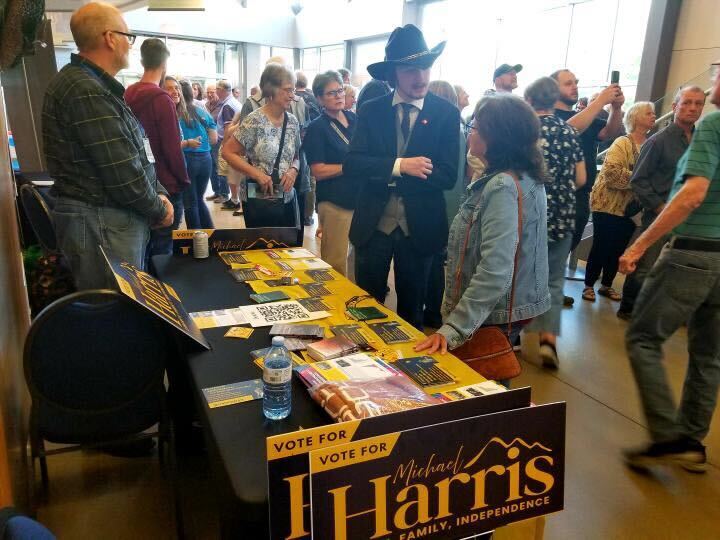
What was unusual this time was the size of the ballot, with more than 200 candidates entering the race. Among them was Michael Harris, a political science student at the University of Calgary, running as the official candidate of the Libertarian Party of Canada. In a conversation with the Gauntlet, Harris shared what his platform stands for, why he chose to run and how the experience of competing against established politicians has shaped his perspective.
Roots in the Riding
Harris, though born in Comox, B.C., has deep family roots in Drumheller, Alta, that go back to 1908, and he describes the town as his “second home,” where he spent every summer with family.
His decision to run is shaped by frustration with what he views as Ottawa’s overreach and neglect of rural Alberta. He points to communities still lacking clean water, roads untouched since the 1960s and emergency services hours away, all while residents pay high taxes for services they rarely receive.
Harris’s campaign centers on reducing government intervention in personal and economic life, strengthening Alberta’s autonomy within Confederation and abolishing equalization and supply management, which he argues drain Alberta’s resources, inflate food prices and harm small Western farmers.
Supply management is Canada’s system for regulating the production and pricing of dairy, poultry and eggs. Established in the 1970s, the system is designed to stabilize farmers’ incomes and prevent overproduction by setting production quotas and controlling imports through high tariffs. He criticizes supply management for forcing farmers to dump excess milk rather than sell or donate it, worsening food insecurity and emphasizes that he is the only candidate in the race openly calling for its removal.
Facing a High-Profile Opponent
While most first-time candidates might find facing a national party leader daunting, Harris takes a different view. To him, running against Pierre Poilievre in a Conservative bastion is less about the odds of winning and more about holding leaders accountable.
“There’s a feeling here that people are being taken for granted,” Harris said. “Poilievre has made it clear he’s not staying in the riding past 2028. That’s not representation — that’s using this community as a political stepping stone.”
Harris has participated in four debates so far, and while he describes most of his fellow candidates as “chill,” he’s noticed a pattern: representatives from the major parties often avoid engaging with smaller-party challengers directly.
“They’ll answer the moderator’s questions but ignore the points we raise. It’s like we’re invisible,” he said. “But the voters notice.”
Lessons from the Trail
Campaigning in rural Alberta has been a learning experience in itself.
Harris says he’s been struck by the condition of infrastructure: crumbling roads, outdated water systems and emergency services that can take hours to arrive.
Even more frustrating to him are the stories of residents being fined or even threatened with legal action for trying to fix problems themselves, whether that’s filling potholes, collecting rainwater or defending their property.
For a libertarian like Harris, such government overreach is proof of systemic failure, yet his encounters with residents have nuanced his views.
“My philosophy is minimal government, maximum freedom,” he said. “But when a community has been paying into a system for decades and is still waiting for basic services, they’re owed what they were promised. If the government can’t provide it, it should stop taking so much from them in the first place.”
How to get involved in politics
For Harris, the heart of his campaign is not simply about securing a seat in Parliament. It is about creating a culture where people, especially young people, feel confident enough to defend their own freedoms. He believes that if Canadians do not take responsibility for standing up for their rights, no one else will.
“The government often says we either need to work together as a collective or just sit down and shut up,” Harris said, with a mix of humour and frustration. “If that is the reality, then we need to start encouraging our generation to get involved. Our grandparents and our families are reaching a point where they can no longer stand for us. We have to be ready to step up.”
Harris is convinced that a student’s time at university is one of the best opportunities to begin a political journey. He encourages students to attend events hosted by different political clubs, even those they do not fully agree with. Meeting people across the political spectrum gives students a chance to hear arguments they may never encounter online or in lectures.
He speaks from experience.
As city director for Students for Liberty and president of its University of Calgary chapter, he has hosted events that welcome anyone willing to debate ideas respectfully.
“It does not matter what political opinion you have. We want you to come to our events so you can debate and hear perspectives that challenge your thinking. That is how we make progress,” said Harris.
For students who are not sure where to start, Harris suggests finding one or two clubs that seem interesting and simply showing up.
“You might walk into a meeting and realize you have just met an MLA or MP who is there to speak. Those moments can open doors you did not expect,” he said.
He advises newcomers to introduce themselves, ask questions and follow up with people they meet.
“It is networking, but it is also building relationships. Even if you do not support someone’s politics, knowing them means that when you do decide where you stand, you have people you can call.”
Harris also noted that many major political parties have tight, insider-driven nomination processes. For students who think they might one day want to run for office, he recommends getting involved from the first day of university rather than waiting until after graduation.
“The earlier you start, the easier it is to make a voice for yourself. If you wait, the door may be harder to open,” he said.
While his own path to becoming the Libertarian candidate was straightforward, as he has already built a reputation as an organizer, Harris knows that most students will need to spend time building credibility. That means attending forums, volunteering for campaigns, helping organize debates or even starting a club of their own.
He sees all of these steps as part of a larger mission: teaching students to think for themselves.
“Do not let the media, politicians or bureaucrats decide how you think. Your time at university is the perfect chance to talk with people, challenge each other and figure out what you actually believe.”
Harris insists that even small efforts can matter. Joining a book club that discusses political history, starting an informal discussion group or volunteering for a local candidate can all be stepping stones.
“If you do not take those first steps, you will not get an accurate picture of what the new generation is doing to fight for you in politics,” he said.
Whether he wins or loses this election, Harris hopes the conversations he has started will motivate more people to act.
“If I get last place but a few people feel empowered to fight for themselves, their communities and their families, that is a win,” said Harris.
In many ways, his campaign serves less as a traditional run for office and more as a call to action. By challenging students and young Canadians to step into political life, whether through clubs, debates or grassroots organizing.
Harris is underscoring that democracy depends on active participation.
His message is clear: politics is not something that happens far away in Ottawa, but something shaped every day by those willing to show up, speak out and take part.