
The largest club on campus: What the Muslim Students’ Association means to students
By Imran Ahmed, September 30 2025—
To many University of Calgary alumni, the Muslim Students’ Association (MSA) is a student club that holds a warm place in their hearts. For generations, the MSA has fostered an inclusive environment for Muslim and non-Muslim students alike.
What started off as a small club for Muslims to practice their faith has grown into the largest student organization in UCalgary. Weekly Friday prayers, known as Jumu’ah, consistently draw between 2,000 and 3,000 participants, and other events and initiatives attract hundreds more. The MSA’s diverse set of initiatives and opportunities, which include but are not limited to advocacy, research and seminars with distinguished guests such as Islamic scholars, known as sheikhs, have established its place as one of the most prominent student-led organizations on campus.
The 2024-25 executives we interviewed seek to grow the club’s prominence and reach. Aitazaz Shah is a third-year global development studies student with a minor in African studies who will serve as the incoming President of the MSA. Mahad Rzain, a third-year law and society student with a minor in Psychology, will serve as the Vice President External. They aim to shape the MSA in a new and bold way.
For example, Shah wants to encourage younger students to participate in the MSA, especially those who may not yet have experience in leadership roles.
“I’m the second youngest on the executive council. Being fortunate enough to be the president at such a young age makes me want to get more younger students involved,” Shah said. “Many of our directors, which we are currently hiring until after club week [over 40 positions], require no prerequisites.”
He also pointed to Islamophobia as an issue that demands a stronger, more proactive approach from the MSA.
“We’re going to continue to fight Islamophobia on campus and work with university leadership to combat it, both at UCalgary and in Calgary as a whole,” Shah said.
What does the MSA do?
At its core, the MSA provides essential services to meet the basic needs of UCalgary’s Muslim students. The club organizes five daily prayers on campus, along with three to five Jumu’ah prayers. Consistent programming allows Muslim students to have access to worship and community regardless of their schedules or background.
However, the MSA’s portfolio extends far beyond organizing and hosting daily and weekly prayers. Events range from educational lectures with Islamic scholars, special programming for female Muslims to large-scale campus-wide initiatives for all students. During Ramadan, the club hosts nightly iftar meals, where students break their fast together, and taraweeh prayers, which are nighttime prayers in the Islamic holy month.
The MSA also emphasizes its role as a community hub year-round, particularly for international students who may feel isolated from family and home.
Staple Initiatives
One staple event is Islamic Awareness Week, typically in the winter semester, where the MSA transforms MacEwan Hall into an open space for dialogue and learning.
“We have booths that explain what Islam is, the history of Islam, and some that are aimed at charity,” Shah said. “During Islam Awareness Week, we also invite sheikhs, individuals who have studied Islam and hold formal qualifications, to share their knowledge.”
Students can also explore henna art, pick up free Qurans in multiple languages and take part in interactive discussions that invite students of all faiths into the conversation.
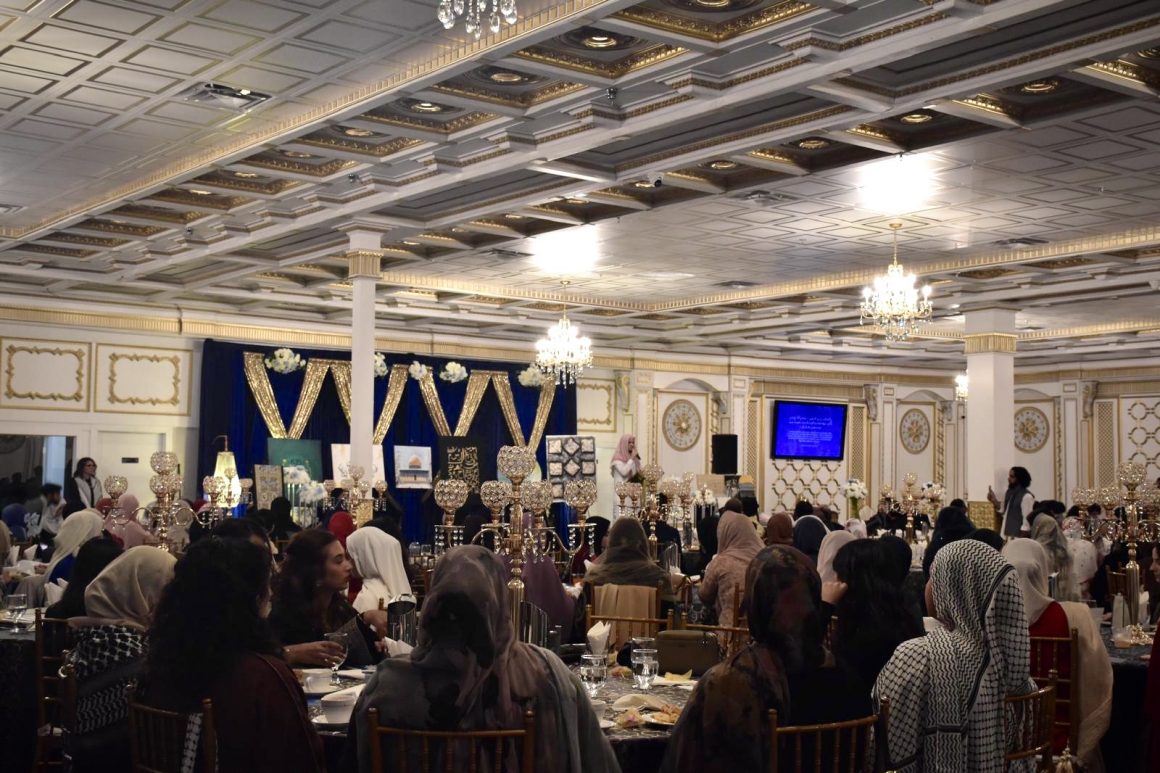
The MSA also runs two major annual banquets. The first is the Charity Week Dinner, which last year raised over $100,000 through an auction of art, local business goods and student work. The second is the Night of Renewal, a fancy dinner hosted at the beginning of Ramadan, which drew over 400 attendees in the previous year.
During Ramadan, the MSA hosts nightly iftars across campus that are sponsored by local businesses and are open to Muslims and non-Muslims alike. Tickets are free, typically selling out within minutes.
“Ramadan is a collective celebration, not something you can really experience alone. These meals create a sense of community where students can share food, sit with friends and feel at home even when they’re far from their families,” Rzain explained.
“We don’t cut corners with the food,” Shah added. “We try to give people the best food we can, and it’s become a huge staple.”
Commitment to Inclusion and Diversity
Despite its name, the MSA is anything but limited to Muslim students.
“Equity, diversity, inclusion and accessibility are all key points we strive for as an MSA,” Shah said. “We believe every student should have equal access to education, food, prayer and other essential needs, and we continue to advocate for that across campus for both Muslims and non-Muslims.”
For Shah, diversity is both an inherent feature of Islam itself and a reflection of the community the MSA builds.
“Islam is a very diverse religion in and of itself. At our events, we bring together people from many different backgrounds and cultures,” he explained. “We also want to ensure that those who might not be openly practising Muslims can come together and be proud of their faith, while also promoting dialogue with other religions and people who don’t believe the same things as us.”
Inclusion, accessibility and safety are also important to the club. From lighthearted community-building events to running multiple daily prayers, and from advocating for exam accommodations on holy days such as Eid to ensuring halal food options on campus, the MSA works to ensure that all students feel they belong within the community.
Advocacy, Challenges, and Growth
Muslim students at UCalgary continue to face challenges such as limited prayer space, lack of exam accommodations, food insecurity and Islamophobia. To address these, the MSA meets regularly with and advocates on behalf of students to the university administration, including with the Vice Provost for Student Experience, and partners with organizations like the Muslim Council of Calgary and the Muslim Association of Canada.
To Rzain, safety is another pressing concern, as many students report feeling uneasy wearing visible markers of faith such as the hijab or keffiyeh. By relaying student testimonies directly to administrators and creating safe community spaces, the MSA aims to leverage its established presence for the betterment of student safety.
At the same time, the association is looking ahead with organizing outside the direct campus community. Shah is determined to grow the MSA’s political presence by hosting events with municipal election candidates, aiming to bridge the gap between politicians and Muslim students.
“We want politicians to see that we are a big force with the 7,000 of us on campus, and that they should be working for our benefit as well,” Shah said. “It’s also about giving students, Muslim and non-Muslim alike, a better idea of who each candidate is and what they stand for.”
When asked to sum up their experience in just one word, the executives offered two that capture the heart of the association.
“Home,” said Rzain. “Empowering,” added Shah.
Together, those words reflect the essence of the MSA.
“I want to make sure that the MSA isn’t simply seen as a club, but a community, a place where people can come together for their diverse needs,” Rzain added.
The launch of a new website (msaucalgary.com), an active instagram account (msaucalgary), a planned event schedule and stronger promotion are set to make the MSA a community that, for generations to come, will continue to hold a warm place in the hearts of students at the University of Calgary.